
Interview with Gizem Magemizoğlu: Part 1:
The Image of the Emperor: The Public Image of Mehmed the Conqueror and Imperial Politics
Summary of the Interview:
"I do not agree with the frequently expressed comments such as "the era of the nation state is over". Nation states are still important and show resistance to the concept of empire. We can say that the concept of empire, which had negative meanings at the beginning of the 20th century, has become more attractive today."
"The Huns appeared on the stage of history as early as 321 BC. At that time, while there were not even traces of the nations that shaped today's Europe, the administrative practice of the Turks began to form."
"Again, according to some reliable sources, Mehmed used the following expressions about himself: "Caesar and Hannibal are nothing compared to me. I can dominate all Christians in the world."
"Mehmed II inherited many institutional structures and practices from his predecessors. Therefore, he is not directly considered the founder of the state. But he is definitely the one who turned the state into an empire."
"Mehmed's biggest "world domination" project was the conquest of Istanbul. With this conquest, he also embraced the Roman-Byzantine heritage. This is a message addressed especially to his rivals and allies in Europe: "I am the true owner of the Roman heritage."
"Mehmed was a world ruler not only in rhetoric but also in the field. It is said that he participated in almost one-on-one battles during the siege of Belgrade, fought with a sword, and was even wounded."
"We cannot explain this religion-based distinction in the Ottoman Empire only with tolerance. Islam has a structure that puts relations with the communities we call the People of the Book on a legal basis. Mehmed has also made this legal basis more institutionalized."
"In the steppe tradition, men belonging to the dynasty had the right to rule. Uncles and nephews also had the right to take the throne. Of course, there were those who killed their brothers, but these events did not become systematic as in the Ottoman Empire. During the reign of Mehmed II, fratricide was institutionalized by entering the law."
"Fratricide is permissible for the Order. It can be said that this system forced the later princes to revolt because the only way to survive was to rebel. As a matter of fact, this practice had consequences such as the conflict between Bayezid and Cem after the death of Mehmed, the murder of Yavuz Sultan Selim's brothers, and the massacre of Kanuni's sons and grandsons."
"Especially in the 17th century, the understanding of the institutionalization of the state becomes more and more evident. The state has turned into such a strong and institutional structure that the importance of the individual, that is, the sultan or individual people, seems to have remained in the background."
"Since Istanbul did not surrender, it was deemed to have been taken with the "Right of the Sword" and Hagia Sophia was turned into a mosque. Hagia Sophia remained the largest mosque in Istanbul for a long time. Mehmed II did not break the mosaics inside, he only had them covered with plaster. This is an indication of his respect for the previous culture."
"I think Mehmed II respected Christianity... This can be considered both as a cultural respect and as a managerial obligation. So this tolerance is also a management practice."
"Not only Turkish-Muslim, but also different peoples such as Greeks and Armenians were settled in Istanbul... We can say that Istanbul became a Muslim city during the reign of Mehmed II, but he did not see the city as a place reserved only for Muslims."
"Mehmed saw himself as the heir to the Roman Empire. He had a claim to Rome, and this constituted his goal of the "Golden apple": to conquer Rome."
"As soon as Istanbul was conquered, Prince Orhan, who was in the city and had taken refuge in Byzantium for a while, was immediately found and killed... It eliminates any possibility of claiming the throne from the Ottoman Dynasty."
"I think that Mehmed II used the understanding of "infidel" or the discourse of war/jihad not only for religious motivation, but also to suppress internal opposition."
"I took the daughter of the Roman Empire – that is, Istanbul – now I am going to take her mother: Rome."
"All you need to have the legitimacy of the Roman Empire is a drop of baptismal water..."
Full Text of the Interview:
Interview with Gizem Magemizoğlu: Part 1:
The Image of the Emperor: The Public Image of Mehmed the Conqueror and Imperial Politics
As the Center for Public Policy, State Administration and Social Development (KAPDEM), thank you very much for accepting our interview offer. We would like to ask you some questions about the content of your book "The Image of the Emperor: The Public Image of Mehmed the Conqueror and Imperial Politics" and your important historical observations there, as well as in order to better understand Mehmed II and establish his connections with the present day. Before starting the interview, could you briefly tell us about yourself and your work for our readers who want to get to know you better?
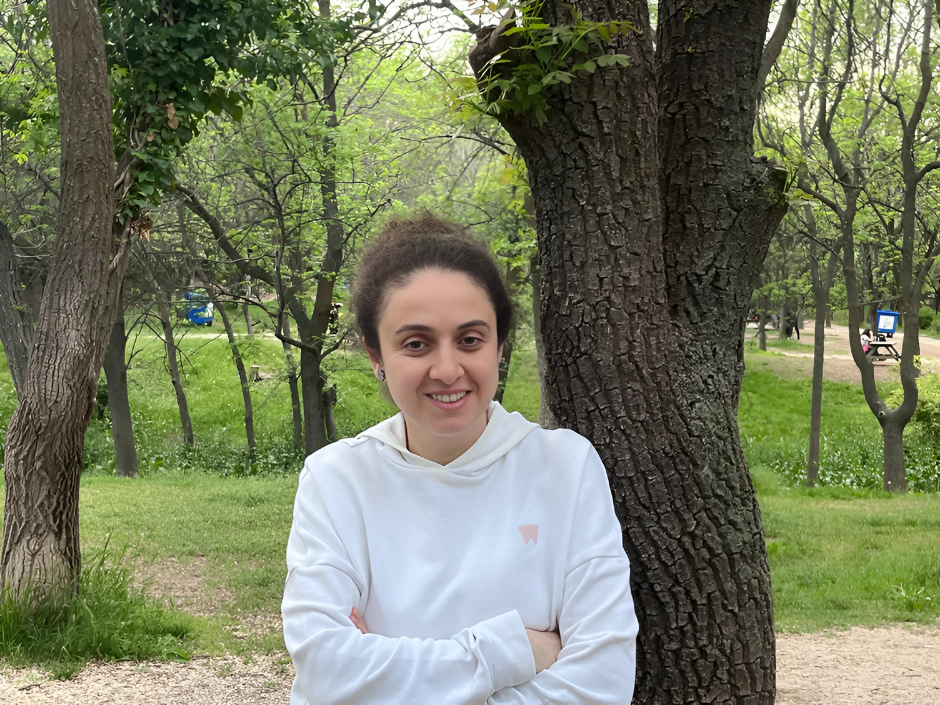
First of all, I would like to thank you for the opportunity to talk about the book. My name is Gizem Magemizoğlu. Between 2008-2013, I completed my undergraduate education at Ankara University’s Department of Political Science and Public Administration. Afterwards, I did my master's degree in both Management Sciences and General Turkish History at the same university. I am currently continuing my doctoral education in the Department of Management Sciences.
What are your main research and interests?
My interests are mainly history, political science and management science. I also like to read political economy. After writing "The Image of the Emperor", I have been following current studies on Mehmed II, but I do not plan to carry out new studies on the political and military activities of Mehmed II in my future academic process. I think this field satisfies me academically. I believe that from now on, this field can be studied more efficiently by researchers in the field of General Turkish History or Modern-Modern History.
"The question 'Why did we fall behind?' is a Eurocentric problematization. It is more important to ask why the Ottoman Empire could not use the debts it received effectively."
Are there any new studies you have started at the moment?
I am currently conducting two different studies. The first of these is a book project on Ottoman debts. I will submit it to the editor soon. Within the scope of this project, I reconsidered my master's thesis in Management Sciences and I would like to examine the Ottoman Public Debt Administration (Düyûn-ı Umûmiye) in great detail. I think that the constantly asked question "Why did we fall behind?" is actually a Eurocentric problematization. Modernization theories are generally the product of Eurocentric historiography. I am trying to move away from this understanding.
Are there any specific issues you focus on in the context of Ottoman debts and the Düyûn-ı Umûmiye?
Borrowing is one of the practices of imperialism. Of course, there are countries that use external debts effectively, but these are quite limited. In my study, I seek an answer to the question "Why did the Ottoman Empire not use foreign debts effectively?" While answering this question, I tried to explain the economic development from the 15th century to the 19th century in a narrower scope and explain the period after the 19th century in a broader way. I have devoted a section to the founding fathers, especially in Lausanne and the process that followed.
Is it a salute to the restructuring and settlement of Ottoman debts in the Republican period, or is it a point of view that includes other consequences together?
We can say the latter. This restructuring is not limited to the efforts of Atatürk and İsmet İnönü in Lausanne; Abdulhamid II is also a part of this restructuring. We see traces of this in the Muharram Decree. "Why couldn't we use these debts effectively?", "How did the Düyûn-ı Umûmiye Administration come about?", "What was the relationship of this institution with public units?", "What was its personnel structure and institutional organization?", "Which revenues did it control and was it able to increase these revenues?".
Can we learn the details of your other project?
My second project focuses on the issue of the settled state. In state studies in Türkiye, the Eurocentric understanding of the settled state is still dominant. However, there are other forms of political power. Ankara University’s Faculty of Political Sciences is currently working on the "nomadic state" and I am also involved in these studies. I hope we can turn to more detailed and comprehensive projects.
"Nation states are still important and show resistance to the concept of empire"
We wish you success in your work. Based on the title and introduction of your book, we would like to first get a general evaluation of you. What does the concept of empire mean to you and what kind of empire was the Ottoman Empire?
In fact, the definitions of empire are quite diverse. I adopt Barış Ünlü's definition in my own works. According to Ünlü, an empire is a large, complex and multi-identity form of government that emerged as a result of the conquest of a powerful center (that is, a metropolis) and governed the lands connected to it indirectly, not directly.
It is not correct to evaluate empires in different periods in the same category. We cannot equate the Colonial empires with medieval empires or the Middle Age with the Ancient Age. For example, the Roman, Sassanid and Achaemenid empires each had a different way of being organized. For this reason, Barış Ünlü's definition seems more inclusive to me.
Today, we see political leaders who are elected at the top of modern states in the world, but who aspire to act like 'emperors'. What do you think are the main differences between the empire and the modern state?
We can talk about five basic features that distinguish empires from modern states:
- They are not integrated structures.
- They can manage their domestic and foreign policies more flexibly.
- Despite their large territory, their territorial dominance is more limited than in the modern state.
- They have a longer lifespan than other political structures.
- Since the peoples they rule are multinational and multi-religious, they may not be able to develop strong political identities.
However, these characteristics do not apply to every empire at the same level. Geography, climate, economic structure and neighboring power balances limit this flexibility. For example, you cannot direct your own politics absolutely; you have to convince the public.
You mentioned the features that distinguish the modern state and the nation state from empires. So, do you think the concept of empire has completely disappeared in the modern world, or has it changed form? Can we talk about empires today?
Perhaps we should ask the question, "How does the concept of empire live today?" This concept began to be discussed as a discourse and ideology, especially after the Cold War, through the "victory of the American Empire". Michael Hardt and Antonio Negri's work "Empire" is also aimed at analyzing the "American Empire". Although it is difficult to directly define the major actors in today's international system as "empires", the search for a political structure beyond nation states continues.
Do you think regional structures such as the European Union are an example of this search for structure?
Yes, perhaps the example of the European Union is very meaningful in this context. The goal of the European Union was to transfer the sovereign powers of nation states to a higher level political structure and to have various levels both below and above this structure. In this respect, it is similar to the imperial logic. However, today, neither the discourse of empire nor the discourse of the nation state is dominant on its own.
So, do you agree with statements such as 'nation states are over'? There is also talk of a constant conflict of global powers and nation states.
Personally, I do not agree with the frequently expressed comments such as "the era of the nation state is over". Nation states are still important and show resistance to the concept of empire. We can say that the concept of empire, which had negative meanings only at the beginning of the 20th century, has become more attractive today.
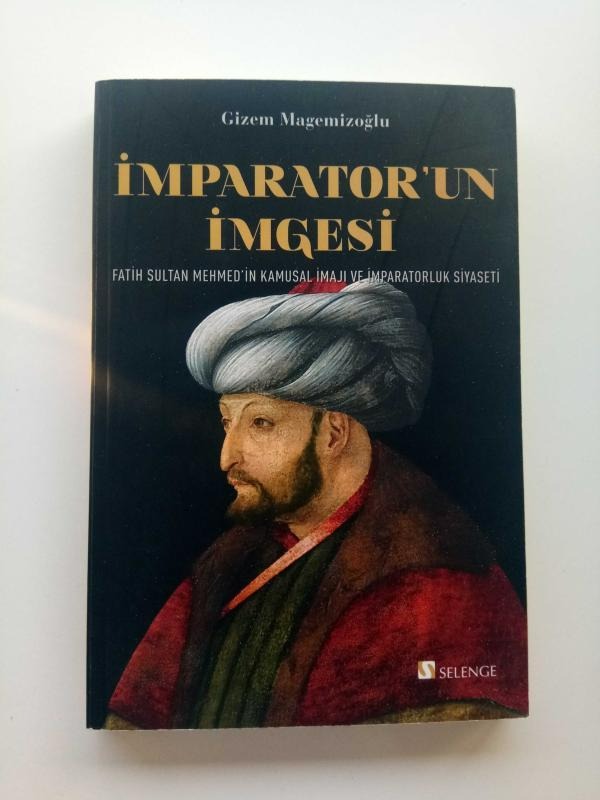
Book: "The Image of the Emperor: The Public Image of Mehmed the Conqueror and Imperial Politics," by researcher and writer Gizem Magemizoğlu.
"There are three basic traditions that feed the Ottoman Empire: Steppe, Iranian-Islamic and Roman-Byzantine traditions"
We try to evaluate the history on the one hand and its reflections on the other. When we look at your book and the Ottoman Empire in depth, and if we examine the path of the Ottoman Empire from a principality to an empire, what do you think are the basic elements that make up its identity and development, looking at the historical heritage that preceded it?
There are three basic traditions that nourished the Ottoman Empire: Iranian-Islamic, Steppe and Roman-Byzantine tradition. But if we need to position him among his contemporaries, the definition of "Gunpowder Empires" may be more appropriate. Originating in the 16th century, this term encompasses empires such as the Safavids, Ottomans, and Mughals. These empires used gunpowder technology, which was more effective than tools such as arrows, bows and swords. It is possible to place the Ottoman Empire in this context; However, one should not forget the three main traditions from which it is fed.
How did this steppe tradition pass to the Ottoman Empire? Can you explain what exactly is the steppe administrative tradition?
The steppe administrative tradition can be defined as the administrative practices of the states that emerged in the context of the economic division of labor between China and the nomadic peoples. One of the first examples associated with this tradition is the Huns, who appear in Chinese historiography. Chinese annals begin to mention the Huns from 321 BC. This shows us that nomadic peoples, who are defined as ahistorical, actually have a very old historical background. For example, some thinkers such as Hegel described nomadic peoples - including the Turks - as ahistorical, but the Huns appeared on the stage of history as early as 321 BC.
Can you explain a little more about the Steppe administration tradition or management model left by the Huns?
The Huns established a structure equivalent to China. From 220 BC onwards, an equivalent structure in terms of military and political power was seen against China. The ruler, known as "Mete Han" in our country, is actually known by his nickname from Chinese sources and his real Turkish name is unknown. A developed state system is seen in this period. For example: Ambassadors are sent, letters are written, a postal organization is established, tax collection mechanisms operate, there is an organized army, and administrators such as officials, governors, and even grand governors serve. In other words, this is not a simple mass of tribes, but a complex state structure.
"The steppe administrative tradition has a history of 2000 years. At that time, when there were not even traces of the nations that shaped Europe, the administrative practices of the Turks began to form."
Is this Steppe administration tradition continued in later nomadic administrations or Turkish states?
Yes, this heritage grows and develops significantly with new experiences in other Turkish states as well. The traditions of this state system were continued by the Turks living in the Inner Asian Steppes or their ancestors, and this tradition reached the Ottoman Empire. The Steppe tradition in question here covers a very wide period of time; We are talking about a process of about 2000 years. For example, the use of "Khan" as the title of ruler in the Ottoman Empire (such as Fatih Sultan Mehmed Khan or Abdulhamid II Khan) is a continuation of the Steppe tradition. The title "khan" means "ruler of rulers" and is also mentioned in the Tonyukuk Inscriptions. At that time, while there were not even traces of the nations that shaped today's Europe, the administrative practice of the Turks began to form.
In this context, can the state administration of the Ottoman Empire be considered as a kind of continuation of the Steppe tradition?
Yes, it is definitely a sequel, but of course it has changed over time. As the geography has changed, the societies with which we interact with have also changed. In this process, which progressed from Turkestan to Iran, from there to Anatolia, and then to the gates of Vienna, some elements were abandoned and new ones were added.
Can you give an example of the effects of the steppe tradition in the Ottoman Empire?
Ottoman historian Mustafa Âli states that concepts from the Steppe were still used in the language of the Ottomans. He was a bureaucrat who grew up in the Ottoman palace, wrote Turkish well and therefore thought well. He makes this observation based on the language structure and says that the traces of the Steppe tradition continue in the Ottoman administrative language. This determination is also mentioned in Cornell Fleischer's work and is really impressive.
Today, it is still possible to see the traces of this tradition in our daily Turkish, but what Mustafa Âli is talking about is its reflections in the language of administration. In the late 16th and early 17th centuries, the Steppe tradition still existed, despite its intertwining with Islamic administrative traditions and the Roman-Byzantine heritage. This is a very important indicator of continuity.
It is constantly emphasized that Turks come from Central Asia. Why is it called the "Steppe tradition" and not the "Central Asian Tradition"? Does "steppe" have a derogatory, backward allusion, or is it used to describe a more inclusive and grand tradition?
The word "steppe" is definitely not a derogatory expression, I would like to emphasize that. When we say "Central Asia", we mean a geographically narrower area. However, the expression "steppe" covers a very wide steppe belt starting from the Gobi Desert and extending from the steppes in Mongolia to Hungary. This steppe belt extends from Iran to Eastern Anatolia. In other words, this geography is much wider.
Today, with the word "steppe", we can only think of the arid areas in Central Anatolia, but this is not the case in the historical context. For this reason, I use the term "steppe" specifically to express that wide geography and historical continuity.
"The Public Image and Identity Construction of Mehmed the Conqueror"
As you mention in your book, we see that Mehmed the Conqueror often uses titles such as 'Sahibikıran' and 'Cihangir'. How did Mehmed II's titles "Sahipkıran" and "Cihangir" shape his public image and public perception?
When constructing the image of a ruler, multiple target audiences are addressed: Enemies, ruling elites, local administrators, and the public. I think that the titles Sahipkıran and Cihangir were used especially by Mehmed II to exert influence on the ruling elites and other Muslim rulers rather than the people.
This is where the tradition of "Siyasatnama" or "Shahnameh" comes into play. Ottoman historians or chroniclers did not only record events chronologically, at the same time, they conveyed these events in a narrative language that the sultan would like. This historiography gave a message not only to domestic politics but also to foreign rivals. For example, such messages to the Safavids, Mamluks or Mughals were intended to emphasize the superiority of the ruler.
Can you tell us about the Ottoman historians who attributed such titles to Mehmed the Conqueror and their citation purposes?
For example, Tursun Bey, one of Mehmed's historians, was one of his treasurers or one of the palace bureaucrats. At the time he wrote it, he attributed the title of "Sahipkıran" to Mehmed II. Sahipkıran means a lucky person born from the auspicious conjunction of the planets.
Molla Aşiki also describes him as "Sahipkıran" in one of the odes he presented to Mehmed. Such descriptions are seen both in literary works and in texts from the palace bureaucracy. Especially high-ranking palace officials such as Tursun Bey consciously used these titles to reinforce the legitimacy and authority of the sultan.
Kıvami, a more populist writer, describes Mehmed II as "the conqueror of the century" in his Fetihname. In such works, the author's relationship with the social class and the state is important. It would be healthier to interpret it accordingly.
Did Mehmed II also adopt these titles or did only the historians of the period use them?
Such titles are not only made up by historians. Mehmed II himself also adopted these titles. This is a strategic message to his enemies as well. These titles are part of the legitimacy created by the Ottoman Empire with its own historiography. We also come across these expressions/titles in Western sources. This shows us that this perception has been effective not only in domestic politics but also in foreign policy. In other words, there is an image construction not only for friends or local administrators, but also for direct enemies. Mehmed II tried to impose his superiority over his rivals through such titles.
It is seen that Mehmed did not hesitate to use titles that would express his power in the letters he wrote to Hüseyin Baykara or the Mamluks in Turkestan. Whether he writes the title of Sahipkıran or not, it is clear how Mehmed positions himself in these letters.
"Mehmed the Conqueror: Caesar and Hannibal are nothing compared to me. I can dominate all Christians in the world."
In your book, you mention that some similarities are established between Alexander the Great and Mehmed II. How do you evaluate this similarity? How did the historiographers make this analogy? In addition, how did Mehmed II himself see this similarity, how did this understanding of world domination resonate in his policies?
Both in the Islamic world and in the West, Alexander is a common figure. He is the ideal ruler model for both cultures. For this reason, similar analogies were made not only for Mehmed II, but also for Suleiman the Magnificent. Suleiman is likened to Alexander in odes and history books.
According to some embassy reports, the biography of Alexander of Macedonia was read in Mehmed's palace. These sources were in Latin and Greek. In fact, there was a Greek biography of Alexander in Mehmed's personal library. Although it is not known whether he read these texts personally, it is certain that he was taught. Again, according to some reliable sources, Mehmed used the following statements about himself: "Caesar and Hannibal are nothing compared to me. I can dominate all Christians in the world."
In other words, he compared himself not only with Alexander, but also with many historical figures such as Caesar, Hannibal, Kaykaus and Cyrus.
In this case, Mehmed does not even see himself as equal to those kings and emperors, right?
Yes, he does not see himself as equal to some, he even expresses that he is superior. Of course, such words may have been said for propaganda purposes. After all, Mehmed was both a ruler and a politician. In the language of diplomacy, showing power is an important tool to influence your interlocutor, but I think these expressions are not only strategic but also with a sincere conviction. The sources I have read make me think that Mehmed expressed these claims sincerely.
"The conquest of Istanbul gave Mehmed great power and legitimacy. He both embraced the Roman-Byzantine heritage and gained a sacred position in the Islamic world."
How did Mehmed's vision affect state policies? What can you say especially about he inheriting the Roman-Byzantine legacy or his reforms toward the West?
Mehmed II inherited many institutional structures and practices from his predecessors. Therefore, he is not directly considered the founder of the state. But he is precisely the one who turned the state into an empire. This transformation process was essentially possible with the conquest of Istanbul. The conquest of Istanbul gave him great legitimacy. I think that without this legitimacy, the bold and radical steps he took would not have been possible. Mehmed's biggest "world domination" project is the conquest of Istanbul. With this conquest, he also embraced the Roman-Byzantine heritage. The title "Kaiser", a derivative of Caesar, indicates that he considered himself the heir to the Roman emperors. This is a message addressed especially to his rivals and allies in Europe: "I am the true owner of the Roman heritage."
In the Islamic world, the conquest of Istanbul is an event heralded by the hadith of the Prophet. This gives it a sacred legitimacy. By combining this two-way legitimacy, Mehmed presented himself as the continuation of both Caesar and the heralded Gazi Sultan (lit. Veteran Sultan).
Are there any examples of Mehmed II using the title Gazi Sultan? Is it using this mostly against Turkish and Islamic states?
Of course. For example, he clearly expresses this in the letters he sent to the Mamluks. In his letters to Uzun Hasan, he accuses him of "putting obstacles in front of his activities". He emphasizes his leadership by saying, "While I am fighting the infidel, you are doing things behind my back."
Mehmed has many conquests. He doesn't look like an emperor who stays in a palace either. Was he a commander who fought at the front or an emperor who stood behind the front? In this sense, can we also say that he is a gazi sultan?
Very true. Mehmed was a world ruler not only in rhetoric but also in the field. It is said that he participated in almost one-on-one battles during the siege of Belgrade, fought with a sword, and was even wounded. This shows that he is a "Gazi Sultan" not only in idea but also in practice. Combining this with "Caesarism" is very important in terms of understanding the dimensions of his political vision.
"The separation of subjects in the Ottoman Empire on religious grounds such as Muslim, Orthodox, Armenian and Jewish cannot be explained by tolerance. This was intended to govern the communities of the People of the Book from the center with a legal basis. But the main thing that forms the basis of the Ottoman identity is something else."
On the one hand, Mehmed the Conqueror wants to look like Caesar in the West, and on the other hand, he wants to be a leading figure in the Islamic world. In other words, as the leader of both the West and Islam, he identifies the vision of a world empire with himself. In your book, you mention that he tried to create an "Ottoman identity". So, how did Mehmed II's efforts to create this identity contribute to his vision of the empire? In the process of transition from state to empire, what meaning did the Ottoman identity gain?
Yes, Mehmed II wants to create an Ottoman identity, but he does this primarily and especially for the ruling elites. If he had aimed for this identity for the broad masses of the people, he would not have divided people into Muslims, Orthodox, Armenians and Jews according to the "millet" system. We cannot explain this religion-based distinction in the Ottoman Empire only with tolerance. Islam has a structure that puts relations with the communities we call the People of the Book on a legal basis. Mehmed also made this legal basis more institutionalized. Its difference from previous Islamic states is that it carries this institutionalization further. With the covenants he gave, he moved the centers of these communities to Istanbul and pulled them to a position where the state could control them.
Then, can we say that the Ottoman identity cannot be described as an order that is the subject of some political discourses today, consisting only of religious groups and shaped flexibly with tolerance to them?
Absolutely, if that were the case, it would not have been a state, it would not have been able to establish order. In fact, the Ottoman identity created by Mehmed was mainly shaped around the kapıkulu class. This class consists of individuals who are centered on the devshirme system and take part in state administration. The ethnicity of these people is very diverse: They can be Albanian, Bosnian, Greek, Italian, Hungarian, Bulgarian or from other Slavic communities. What they have in common is that they have gained a new identity shaped by loyalty to the Ottoman system.
There are also historians who describe the devshirme system as a terrible assimilation. To ensure that children were completely separated from their families and had no ties, so that the only loyalty was to the Ottoman Empire?
This is not true. There are always similar practices in the periods of empires and kingdoms, their names may change; after all, in these structures, the state is generally considered a family and the first priority is not to question the loyalty to that family. The devshirme identity created in the Ottoman system does not mean that they have completely forgotten their mother tongue and family history. For example, the brother of Sokollu Mehmed Pasha still served as a bishop in Serbia. However, the authority, wealth and status of these people are directly dependent on the sultan and the state. This devotion has shaped their thinking. In other words, in my opinion, the person who laid the intellectual foundations of the empire was Mehmed II.
"One of the most important differences that distinguishes the Ottomans Dynasty from other Turkish dynasties is that they attached great importance to centralization since the formation of the state. The fratricide law has been one of the harshest practices of this."
We can say that Mehmed II carried out many reforms thanks to the great legitimacy he gained with the conquest of Istanbul, and even took steps that could be considered progressive for his period. However, he also had very harsh policies such as fratricide. What do you think was the importance of the practice of "fratricide" in terms of the security of the Ottoman throne? Was there a practice such as fratricide in the Steppe tradition maintained by the Ottoman Empire? How do you evaluate this application? Also, what do you think was the sociological and psychological impact of this practice on the next sultans?
One of the most important differences that distinguishes the Ottoman Dynasty from other Turkish dynasties is that they attach great importance to centralization since the formation of the state. In previous Turkish dynasties, every male member of the dynasty had the right to participate in the administration. In the steppe tradition, men belonging to the dynasty had the right to rule. Uncles and nephews also had the right to take the throne. Of course, there were those who killed their brothers, but these events did not become systematic as in the Ottoman Empire. During the reign of Mehmed II, fratricide was institutionalized by entering the law.
How did fratricide end up being institutionalized?
The processes that have taken place up to this point are important. In the beginning, the principle of "Sultanate belongs to the sultan and his sons" was established. In other words, uncles and nephews were excluded. However, this did not solve the problems. As a matter of fact, the Interregnum Period, which started with the defeat of Yıldırım Bayezid by Timur, was the direct result of the brothers falling out with each other.
Timur's son Shahrukh sent a letter to Mehmed Çelebi, accusing him of "violating customs" for killing his brothers. That is, he stated that he violated the Mongol-Turkish steppe traditions. Even this shows that fratricide was not welcomed at that time. Mehmed II, on the other hand, created a legal basis for this practice by writing "Fratricide is permissible for the Order" in his law.
Why do you think Mehmed II felt the need to legalize fratricide? When we look at the results, did fratricide achieve the intended goals?
Some historians consider this necessary to maintain the unity and order of the state. Mehmed II also thought so. He did not want there to be another Interregnum. There are different evaluations about the results. After all, the empire continued for centuries afterwards. However, some scholars, such as Haldun Eroğlu of Ankara University, argue that this system forced later princes to revolt because their only way to survive was to rebel. As a matter of fact, this practice had consequences such as the conflict between Bayezid and Cem after the death of Mehmed, the murder of Yavuz Sultan Selim's brothers, and the massacre of Kanuni's sons and grandchildren. This chain continued for centuries.
So how did fratricide work in terms of practice? Did the right start when the sultan died? Or could they intervene before?
In general, fratricide was practiced after the sultan died. However, in some cases, this system was deviated from. For example, when Bayezid II was alive, conflicts began between his sons. Yavuz Sultan Selim rebelled while his father was still alive. There was no clear, strict rule about when this practice would begin.
However, we should not forget that we are talking about a system in which even a ruler like Suleiman the Magnificent, who is considered his "peak period", had his two sons and five or six grandchildren killed. This reveals how systematic fratricide has become and the magnitude of the psychological pressure.
In this context, it can be said that it is a very interesting situation. Under the conditions of the period, let's imagine a prince whose father was a sultan and who was old or sick. If he's not the big kid or doesn't have a strong supporter, he hardly stands a chance. He will either be killed or run away, he has to do something. Because when the sultan dies, it becomes very difficult for him to survive.
"The practice of fratricide forces the princes to rebel or flee. Otherwise, he will be killed. The sanjaks they were sent to can give clues about who was deemed worthy of the throne. For this reason, Yavuz Sultan Selim may have rebelled early and had his father Bayezid II killed."
The tradition of sending princes to the sanjaks in the Ottoman Empire was especially concentrated in strategically important sanjaks such as Amasya. Did this practice lead to the actual determination of the sultan's successor? Can the princes' duty in the sanjaks be considered as a tradition that increases the struggle for the throne and mutual distrust between the brothers?
Yes, this tradition exists. For example, Manisa is very important as the sanjak of the prince. Amasya was equally important. They are very close to Istanbul. So is Kütahya. But there is a different situation in the case of Yavuz Sultan Selim. Yavuz was sent to Trabzon. His son to Kefe. It is much more difficult to reach Istanbul from Trabzon or Kefe than Manisa or Amasya. For this reason, Yavuz does not see himself close to the sultanate and this is one of the reasons for his rebellion.
Not some Ottoman historians, but chroniclers, think that Yavuz eliminated his father, Bayezid II. Frankly, I am one of those who think that Bayezid died as a result of poisoning, not illness.
"The idea of proto-democracy in the Ottoman Empire first came to the fore during the reign of Deli İbrahim"
But what would happen if the sultan and his sons died, that is, if there was no one left from the male members of the dynasty? In this case, would it be passed on to distant relatives such as uncles or nephews, or would there be a completely different power struggle?
The danger of male extinction occurred once in the Ottoman Dynasty. This situation emerged during the reign of Deli İbrahim. Only Deli İbrahim was alive at that time. If he did not have a son or was deposed, it was unclear what would be done. In the face of this possibility, the following idea was put forward: To bring a man from the Giray Dynasty in Crimea. Because the Girays were based on the lineage of Genghis Khan and this made them noble.
Why is a descendant of the founder Osman I not sought?
The lineage of Osman I’s uncles had already dispersed, and the villages had become forgotten. Maybe they only knew that they were from the Kayı tribe, but they did not remember that they were part of the Ottoman Dynasty, or they were made to forget this identity. There was no information or tracking system left that said, "The descendants of this uncle live in this region".
If there was no one from the Giray Dynasty, were other options discussed at that time?
Yes, and most interestingly, if they could not find someone from the Giray Dynasty, the idea of "we would govern ourselves" was even discussed. In other words, it cannot be called a republic in the strict sense, but the idea of a kind of "proto-democracy" came to the fore.
Especially in the 17th century, the understanding of the institutionalization of the state became more and more evident. The state has turned into such a strong and institutional structure that the importance of the individual, that is, the sultan or individual people, seems to have remained in the background. Various anecdotes of the period also support this situation.
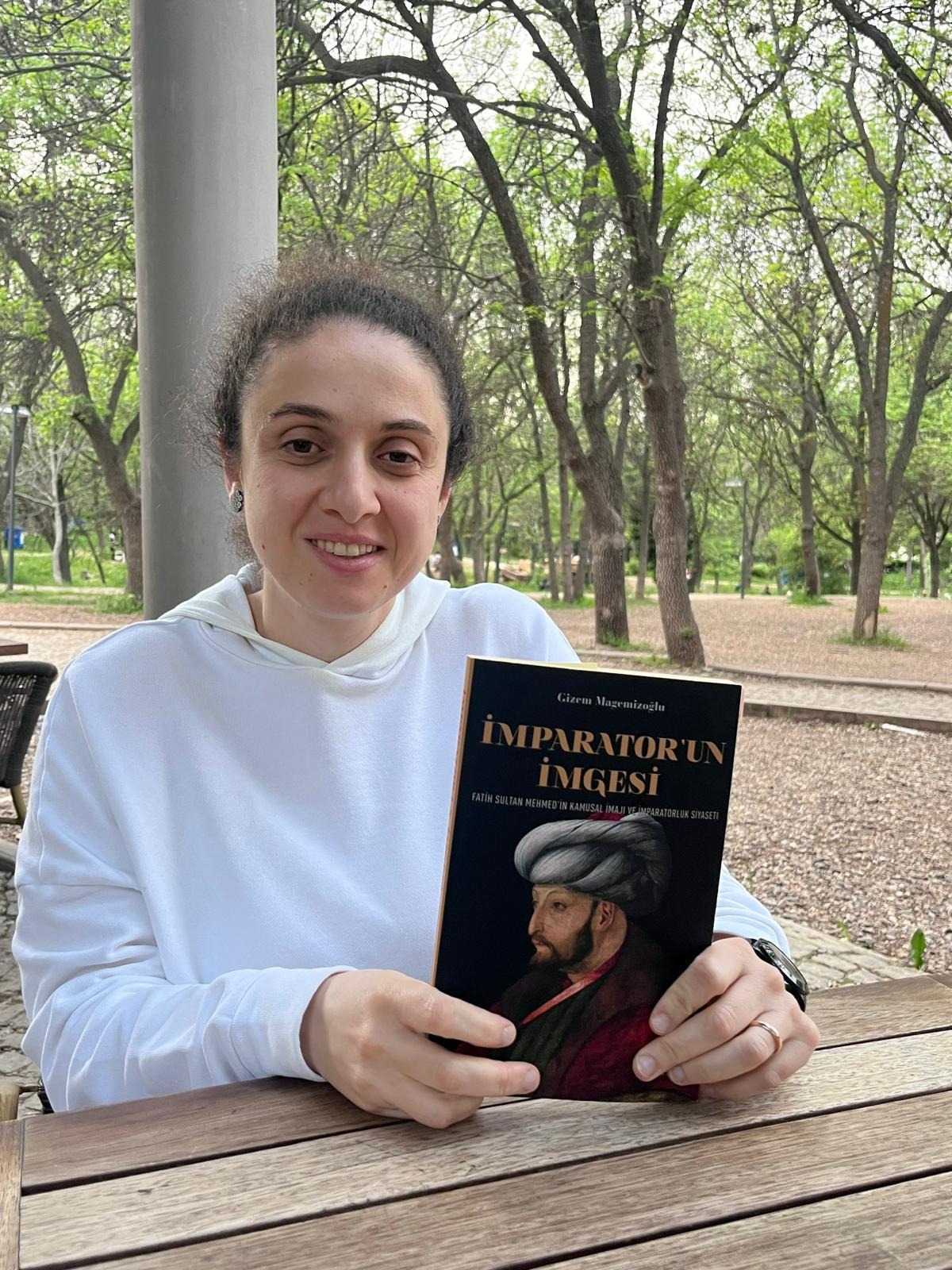
Photo 2: © Center for Public Policy, State Administration and Social Development (KAPDEM), 2025. All copyrights reserved.
"The Conquest of Istanbul, Hagia Sophia, Mehmed's vision and the Millet System"
Let's talk a little bit about the details of Hagia Sophia and the conquest of Istanbul, which was on the agenda during this period. How do you think Mehmed II's post-conquest process of transforming Hagia Sophia reflects his cultural and political vision?
Hagia Sophia was the largest church in Istanbul before the conquest. According to Islamic customs, the largest church in a conquered city is converted into a mosque and the first Friday prayer is held there. Since Istanbul did not surrender, it was deemed to have been taken with the "Right of the Sword" and Hagia Sophia was turned into a mosque. Hagia Sophia remained the largest mosque in Istanbul for a long time.
Although it is a mosque, it seems that the shapes and figures inside are preserved. Looks like Mehmed had a different vision. How do you evaluate this? We know that the soldiers were given the right to plunder in places taken with the right of the sword.
Yes, Mehmed II did not break the mosaics inside, he only covered them with plaster. This is an indication of his respect for the previous culture. In addition, the people who took refuge in Hagia Sophia after the conquest were not harmed. When he saw a soldier breaking the marbles in Hagia Sophia, he scolded him: "This is my city, you cannot behave like this here" and considered it vandalism.
Although there is a right to loot for three days in conquered cities in Islam, Mehmed II stopped this looting at the end of the first day. This shows his vision; in fact, he decided what to do in Istanbul before he conquered it and put it into practice from the first day.
Were the mosaics plastered because it was not permissible to pray where the figures were? Or could it not even have been plastered?
Yes, it was plastered because praying in front of the figures is not in accordance with Islamic law. But it is also clearly seen that Mehmed II tried to protect these figures.
So, is this protection due to Mehmed II's special interest in Istanbul or Hagia Sophia? Or is it part of a larger "political vision"? Especially considering that he defined himself as Kaiser of Rum, could he have wanted to appeal to the Christian world as well?
Even before besieging Istanbul, Mehmed II intended to make it the capital. He had such a plan since he took the throne for the second time. Therefore, he wanted to protect the city. After the conquest, he released the captives and settled them in the city. Because Byzantium was very weak, there was not much left of its power in the 7th and 8th centuries.
There are those who interpret this vision in different ways, even historians and writers who claim that Mehmed the Conqueror was a Christian or not very devoted to the religion of Islam. What do you think?
This is absolutely not true. Mehmed II's interest in theology is known. We see clearly why he did what he did and his vision later. His practices should not be considered as showing a predisposition to Christianity, but it can be said that he was interested in works, rituals and practices.
Can you elaborate on this?
For example, a writer named George of Hungary was held captive in the Ottoman palace for 20 years, then somehow gained his freedom and went to the Vatican and worked as a writer there. According to his memoirs, Mehmed II attended communion services and observed Sunday services. He ate the unblessed bread given by the priests. George wrote that Mehmed II was respectful to Christianity.
Another devshirme escaped from the palace after Mehmed II died and served in the Vatican, and in his memoirs, he told that Mehmed II was interested in Christian holy relics as a collector. For example, he collected Christian relics such as:
- The stone where Jesus was born,
- The tools of the passion of Jesus,
- The body of Isaiah, with his hair, beard, and ears,
- Holy innocents killed by Herod the Great, the king of Israel, during the years of Jesus
Although this person worked for the Vatican, I don't think what he said is fabricated. It is possible that Mehmed II collected these relics with the idea that he had inherited the legacy of the Roman Empire. Perhaps his interest in these icons caused him not to accept their destruction. In other words, the fact that he only covers them by plastering them may be a result of this sensitivity.
Well, if we open the claims in magazine historiography, one of the main claims is that Mehmed II was a Christian and that his mother made him a Christian. Do you think these are just speculations?
Mehmed II lost his mother at a very young age. For this reason, I don't think he is a child who grew up under the influence of his mother. Therefore, it does not seem right to me to attribute his conversion to Christianity to his mother. I think that Mehmed II respected Christianity. There may be several reasons for this: First, half of his subjects are Orthodox. In order to manage these people, it is necessary to recognize and respect their values. This can be considered both as a cultural respect and as a managerial obligation. So this tolerance is also a management practice, a great vision.
"The Ottoman millet system is not an ethnic, but a religious-based organization"
You have just mentioned the Ottoman identity. Ottoman identity is more identified with the ruling class, but you are also talking about a millet system. What kind of balance has been established between religious and ethnic communities within this system?
The millet system of the Ottoman Empire is a structure taken from the Islamic states before it. In fact, it has a history that goes back even further, to the Persians, not only the Islamic tradition. The model of organizing in communities was shaped within the Iranian-Islamic tradition and was also applied in the Ottoman Empire. Islam gives nations that are considered "people of the book" the right to regulate their internal affairs, marriage rules, and community relations. This creates the nation structure based on the community system of the Ottoman Empire.
What kind of system was this millet system?
The millet system is based on religious communities. In other words, it is not an ethnic, but a religious-based organization. The internal affairs of each community, especially civil matters, are managed by the clergy of the community. This structure is connected to the state; Muslims and non-Muslims have different statuses, especially when it comes to taxes and military service. Non-Muslims pay taxes such as kharaj and jizya, they do not go to military, but they pay higher taxes in return.
The Ottoman Empire carried out this practice in different ways in different periods, but basically religious communities were given freedom of worship and the right to apply their own rules. What makes Mehmed II special in this regard is that he gave this practice a legal status. By giving ahidnâmes (edicts) to the communities, the sultan guaranteed their rights. The sultans who came after him continued this practice and renewed the edicts of the communities from time to time.
In connection with this, how do you think the preparation of the Kanunname-i Âl-i Osman contributed to the legal, administrative and perhaps social structure of the Ottoman Empire?
Kanunname-i Âl-i Osman is mostly related to the organization of the state. In other words, rather than regulating the state's relationship with communities, it regulates the internal structure of the state. It covers areas such as titles, rules regarding offices, administrative structure, protocol, etc.
The important thing that Mehmed the Conqueror did here is that he systematically brought together and codified the scattered rules for the first time. In this sense, we can compare it to codifying rulers such as Hammurabi or Justinian II. In short, it makes existing applications tidy but also adds innovations. For example, fratricide is included as a legal provision in the Kanunname-i Âl-i Osman for the first time. This is also made a part of the system.
"Mehmed made Istanbul a Muslim city, but he did not see the city as a place reserved only for Muslims. He gathered the administrative centers of different religions in Istanbul"
After the conquest of Istanbul, what kind of practices did Mehmed II carry out for the integration of non-Muslim subjects? What kind of legal or administrative arrangements have been made in this new structure where the East and the West are united?
The millet system continued during the reign of Mehmed II. As I said before, freedoms were directly guaranteed by the sultan with the edicts for non-Muslims. He was very careful in the integration process. Not only Turkish-Muslim, but also different peoples such as Greeks and Armenians were settled in Istanbul. For example:
- Greeks from Konya-Karaman region,
- Orthodox Greek families from the Peloponnese,
- Families from Serbia were brought to Istanbul.
We can say that Istanbul became a Muslim city during the reign of Mehmed II, but he did not see the city as a place reserved only for Muslims.
For example:
- The Armenian episcopacy moved from Bursa to Istanbul.
- Jews had a chief rabbi in Istanbul.
Thus, the administrative centers of different religions were moved to Istanbul. He also granted economic concessions to the leading Greek families of Istanbul. For example, concessions regarding copper and silver mines in Rumelia were granted. Also:
- He did not touch the trade colony in Galata.
- He granted exemption from taxes and drudgery.
- He provided special privileges to the Levantines.
With the devshirme system, some people from Byzantine aristocratic families became Muslims and joined the Ottoman bureaucracy. There are also examples that rose to the rank of Grand Vizier. In other words, Mehmed II implemented a multi-faceted policy in order to ensure both economic, social and administrative integration of non-Muslim subjects.
"Mehmed II's Imperial Vision, Economic Policies and Orientation to the West"
You mention Mehmed II's motivation for jihad in your book. Especially his understanding of imperial identity comes to the fore. So, how did this understanding of imperial identity of Mehmed II shape the position of the Ottoman Empire in world politics?
Mehmed II had several important goals in the international arena. First of all, he did not want to see a ruler equal to himself in the east. This situation brought him face to face with Uzun Hasan and at the end of the process, the Battle of Otlukbeli took place. This was not only political, but also aimed to break the influence on the Turkmens.
Secondly, he did not tolerate the existence of any equal family in the regions he captured from the Byzantine Empire, for example, in places such as Peloponnese and Trabzon, except for Istanbul. So he eliminated the local rulers and family members of these regions.
In addition, he integrated Serbia, Bosnia and Albania into the timar system in order to reduce the influence of local families. Thus, these lands were not transformed into a classical structure independent in internal affairs and dependent on the Ottoman Empire in foreign affairs; they were directly included in the Ottoman provincial system.
Mehmed the Conqueror did not see any ruler as equal to himself. He saw himself as the heir of Rome and claimed rights. His 'Golden apple' goal was to conquer Rome"
There was no ruler in the West that he considered greater than himself, right?
At the heart of Mehmed II's imperial system was the uniqueness of the Ottomans Dynasty. He did not tolerate any dynasty or family that could rival him. Likewise, he fought several times with the Hungarian Kingdom, his greatest rival in Central Europe. There was a similar competition here. He didn't want to be equal to anyone.
He also considered himself the heir to the Roman Empire. He had a claim to Rome, and this constituted his goal of the "Golden apple": to conquer Rome.
This "not wanting a rival" situation you mentioned also reminds us of the Turkish state tradition. In previous Turkish states, there were always situations such as internal conflict, the struggle for the throne between brothers and uncles, and the division of the country into East and West. Could this be paranoia from the past? Because in this understanding, anyone who can win "Kut" is a potential opponent. Therefore, can we say that Mehmed II left neither a rival, nor a brother, nor an uncle?
I absolutely agree. A good example of this situation can be given as follows: As soon as Istanbul was conquered, Prince Orhan, who was in the city and had taken refuge in Byzantium for a while, was immediately found and killed. It is not clear whether he was fully related to Mehmed II, but in any case, he was not to be left alive.
It eliminates any possibility of claiming the throne from the Ottoman Dynasty.
Could it have also contributed to the long imperial life of the Ottoman Empire? There are many different opinions on this issue, but can we think that it has a positive effect?
Frankly, I think it does not contribute positively and increases conflicts. Especially referring to Haldun Eroğlu's approach, if this practice had not existed, perhaps they would have directed their energy outwards instead of internal conflicts. They could have put more effort into institutionalization. But it's all about the odds.
In your book, you emphasize that Mehmed saw himself as the emperor of not only the East but also the West and found the title of "Allah's shadow on earth" appropriate for him. How did this title shape his understanding of management?
The title "Allah's shadow on earth" is a title used by many Muslim rulers before Mehmed. So this is not something that came out with Mehmed. But from the moment Mehmed thought that he had attained the hadith of the Prophet, he had already found legitimacy for all his actions. The fact that he formalizes this title is actually not that important. He already sees that power and right in himself.
However, some of Mehmed's actions based on this title and right were criticized by some sects in the Ottoman Empire from time to time. In particular, the inclusion of waqf and property lands in the timar system led to serious criticism from some sects.
"The conquest of Istanbul brought great legitimacy and prestige to Mehmed in the East. However, there were also states that rejected the greatness of Mehmed."
But has this legitimacy also prevailed in the Islamic world? Is such an approach found in the sources of that period?
Yes, Mehmed attracted many scholars and artists from the East to Istanbul over time. Poets, writers and representatives of ulema from Turkestan and Iran gathered around him. The odes and works written by these people support the legitimacy of Mehmed.
Can you give examples?
For example:
- Ali Kuşçu deals with this legitimacy in his work Risaletü'l-Fethiyye, which he dedicated to Mehmed.
- Kıvami puts forward views in the same direction in his work called Fetihname, which he wrote about the conquest.
- Tursun Bey is both a statesman and a historian. This position of Mehmed is clearly emphasized in his works.
However, the conquest of Istanbul does not seem to have brought a direct allegiance to the rulers in the East. Can you give examples of this?
Yes, when we look at the state level, for example, Uzun Hasan uses the following argument when opposing Mehmed: "The Ottomans were once vassals of the Ilkhanids or the Mongols. I am the representative of the Ilkhanids. Who are you?"
Such discourses also show that legitimacy is not always universally accepted. The situation is a little more remarkable in the case of the Mamluks. Some members of the Abbasid dynasty who survived the Mongol invasion of Baghdad took refuge in Egypt. Here, the caliphate continued under the protection of the Mamluk rulers, that is, it is not a fully independent caliphate, but the title of caliphate is kept alive.
When we look at the correspondence between Mehmed II and the Mamluks, we see that Mehmed II initially used a more respectful tone toward the Mamluk Sultans. However, over time, this tone becomes more confident. Perhaps it seems to have adopted a distinctly higher tone.
Can you elaborate on this?
For example, the titles used in his letters also change over time. The forms of address he used for the Mamluk Sultans differ. This shows that Mehmed II now saw himself in a higher position in the Islamic world.
There are even statements in some sources that insult the Mamluks. For example, the word "Mamluk" already means "slave". Mamluks, slaves, are people who were bought and trained as soldiers, then became generals and came to power with a coup. Mehmed II, on the other hand, describes his lineage as a noble dynasty that became famous for war and jihad. It is alleged that he used derogatory rhetoric toward the Mamluks, calling thme "simply slaves".
Some historians even wrote that Mehmed II's last expedition was against the Mamluks. For example, İdris Bitlisi, the author of Heşt Behişt, is a historian who lived during the reign of Bayezid II, but he also wrote about the events that took place during the reign of Mehmed. Perhaps he made this interpretation based on an observation or sensation. We don't know for sure, but this is also an important assessment.
"Mehmed the Conqueror's trade policies and institutionalization steps"
So what were the trade and economic policies of Mehmed II? In this sense, how did the various reforms he made contribute to the long-term power of the Ottoman Empire?
Mehmed II's trade policies are primarily shaped around the goal of making Istanbul a trade center. Immediately after the conquest of Istanbul, he ordered his viziers to build a covered bazaar and a mosque. These structures both gave an identity suitable for Islamic civilization and aimed to revive trade.
When we look at the conquests he made in the Black Sea region:
- Sinop Port was completely connected to the Ottoman Empire.
- With the conquest of Kefe, the Genoese colony was taken under control.
- In this process, the Crimean Khanate was connected to the Ottoman Empire.
With these steps, the Black Sea route of the Silk Road is directed to Istanbul. In addition:
- The Latin trade colonies in Pera and Galata were preserved, and important privileges were granted to merchants.
- Some rights that only the administrative elite had were given to these colonies.
Did Mehmed the Conqueror issue laws on trade similar to Kanunname’i Ali Osman? Did it increase institutionalization?
Yes, Mehmed II also published laws regulating international and local trade. Not only the famous Kanunname-i Âli Osman, but also other regulations that take into account the market order and price balance.
An important example is this: An Italian merchant pays a poet to write praise for Mehmed. The name of this poet is Otman (Osman) because the merchant's father was a merchant in the palace of Murad II and said that if I had a son, he would name him in a way that would remind him of the Turks. Even this small but symbolic event gives an idea of Mehmed's international reputation. This event is also mentioned in the book "Amyris: The Life and Conquests of the Turkish Emperor Mehmed", which was published by Kopernik Publications in the summer, and I recommend it to our readers who want to benefit from it.
In addition, he granted special privileges for the mines in Anatolia and Rumelia. The policy of conquest was also aimed at seizing the mines from time to time. Economically, this created a strong infrastructure.
Finally, the gold coin called "Sultan Florin", minted in 1478, does not change much in value throughout the century. It almost did not lose any value until the price revolution in Europe. This is a very important detail that shows the success of Mehmed II's financial reforms.
You talk about different expeditions in your book. Especially the Otranto Expedition looks interesting. How did such military operations serve the Ottoman vision of becoming a universal empire? What was the impact of the Otranto Expedition in the West?
Yes, this is a very important issue. First of all, I must state that the number of Turkish sources about the Otranto Expedition is very few. As far as I know, it is only mentioned in Neşri and another source. But it had a great impact in Italy. Geographically, Otranto is located in the southeast of the Italia, at a very strategic point. When the Ottomans captured this place, they did not stay here but also created areas where more soldiers could be stationed. This shows that the Ottoman Empire was preparing to make larger campaigns in the future.
In this context, if we go back again, do you think Mehmed's conquest of Rome was realistic? Are there examples of him taking concrete steps toward it as a clear goal?
Looking at the Italian sources of that period, Mehmed II's intention to conquer Rome can be seen very clearly. It is even said that he used the following expression: "I took the daughter of the Roman Empire – that is, Istanbul – now I am going to take her mother: Rome."
Although this statement is a rumor, we get the impression that Mehmed II deliberately allowed such rumors to spread.
In addition:
- He brought maps of Italy.
- He said that he knew the history and establishment of Venice in detail.
- It is known that he talked about plans to advance to Venice via Albania.
All of this reveals his plans to clamp down on the Italian Peninsula from the south and north. After the campaign, an Italian poet said, "Italians, what are you waiting for to unite?". This shows that it has created a serious fear and influence in Italy.
The Italy of the period was already very fragmented. Borgia families, city-states, the papacy... They were all acting in their own interests. This fragmentation is clearly seen in Machiavelli's work "The Prince".
Mehmed II, on the other hand, wanted to take advantage of this division, but it seems that his life was not long enough. If you ask me, his ultimate goal was indeed Rome.
"The concept of 'other' in the Ottoman Empire and Europe: Europe defined its Catholic identity with its hostility toward Mehmed II and the Turks"
You have given extensive room to the concept of "other" in your book. How do you think Mehmed II used this concept to create political unity?
Several different definitions of "other" can be made for Mehmed II. I can say this clearly: The political and military activities of Mehmed II strengthened the image of the "other" in Europe.
The other for Mehmed II:
- First of all, the ruling dynasties in the Byzantine lands he conquered. Many of these families have already been eliminated.
- Then come the deep-rooted Turkish-Muslim principalities in Anatolia. Some of these families were exiled to Rumelia, and some were given fiefs in Rumelia in return for accepting Ottoman sovereignty. However, Mehmed II did not leave them in Anatolia; he placed them in other regions on the condition that they serve.
Do you think his 'infidel' discourse is also in the context of this other or only in a religious sense?
I think that Mehmed II used the understanding of "infidel" or the discourse of war/jihad not only for religious motivation, but also to suppress internal opposition. This situation of a sultan who was constantly on campaigns had serious economic and social effects, especially on landowners and janissaries. He did not hesitate to resort to violence when necessary.
This is actually an important issue. Mehmed is constantly busy with campaigns and conquests, and it seems that he never stops. Can you also talk about information such as that the soldiers are tired of continuous campaigns and want to rebel?
Yes, the Janissaries grumbled from time to time. Although they could not rebel directly after the conquest of Istanbul, they remained silent due to the harsh authority of Mehmed II. But after his death, a great rebellion broke out.
- Neighborhoods where non-Muslims lived in Istanbul were looted.
- Jewish doctor Yakub Pasha, who later converted to Islam, and Grand Vizier Nişancı Mehmed Pasha were killed. (Nişancı Mehmed Pasha was a supporter of Cem Sultan, the brother of Bayezid II)
These events show us the traces of the opposition accumulated in society against Mehmed II, no matter how centralized and all-powerful a ruler he was.
If we go back to the concept of 'other', it is seen that Europe also has a serious perception of the 'other' toward Mehmed and the Turks. You also mention this.
It is important to mention the concept of "other" in Europe. In fact, Europe defined its Catholic identity with its hostility toward Mehmed II and the Turks. The figure of Turks and Muslims was literally positioned as the "other" in the West. Traces of this still continue.
"Mehmed is the ruler profile described by Machiavelli in his The Prince. The Prince does not need love, but obedience and fear"
So how did the different perceptions of Mehmed II in the East and West affect his vision of the empire? In the East, he is both a respected figure and has rivals. In the West, it is sometimes described with adjectives such as despot or tyrant. How did these two different perceptions affect him?
I think that Mehmed II consciously created these two different perceptions. Maybe he wanted to be respected, not feared in the East, but he wanted to be feared and visible in the West. In this respect, he is a figure very suitable for the ruler profile described by Machiavelli in his "The Prince".
In the East, he positioned himself as an unattainable Islamic ruler, while in the West, he wanted to be the Muslim heir of Rome, even the founder of Muslim Rome. He also embodied this desire for visibility:
- Between 1479 and 1481, he made portraits and medallions of artists he personally invited to Istanbul.
- It is known that medallions were ordered in his name in the 1460s.
He wanted to be unattainable in the East and a known and feared figure in the West.
Do you think the most important event that brought the Ottoman Empire to the level of a universal empire was the conquest of Istanbul?
It was definitely the conquest of Istanbul. But not only the conquest was important, but also the right timing. Europe was in a very fragmented structure at that time and Mehmed II took advantage of this situation very well.
The conquest gave great legitimacy in both the East and the West. Pope Pius II even wrote a letter to Mehmed II suggesting that he become a Catholic. We don't know if this letter was actually sent, but its content is quite remarkable. The letter says: "All you need to have the legitimacy of the Roman Empire is a drop of baptismal water" and "Catholicism needs a ruler like you in this fragmented world." Even these two sentences show how powerful and influential Mehmed II was in the eyes of the West. This letter was most likely a propaganda text. It may have been written to convince the European public opinion to unite in the face of a danger like Mehmed II. But it also shows that Mehmed II was perceived as someone who was really strong enough to unite the whole of Europe.
- TO BE CONTINUED –
In the second part of the interview, we will continue to talk about the content of the book, the reflection of historical events on the present, and more current political and administrative issues.