
Interview with Gizem Magemizoğlu: Part 2:
From Imperial Thought to the Present: Ottoman Heritage, Steppe Tradition and Modern Türkiye
Summary of the Second Part of the Interview:
"One of the most important lessons that can be learned from empires is that power should not be so absolutized. Because empires, by their very nature, praise and absolutize power."
"During the collapse of the Ottoman Empire, there was a 'soup of nations'. After all, the nation state is not a structure that came about in vain."
"In the Ottoman Empire, being of Turkish descent and Turkish were always prioritized. The 'Oghuznameh tradition' has always been continued. Mehmed gave Turkish names to his children and grandchildren."
"The practice of 'fratricide' for the survival of the state brought by Mehmed is contrary to the Steppe tradition. Other Turkish states did not find this right."
"Some of the people came to prefer the Ottoman administration over Catholic rule. The phrase 'we’d rather see the Turkish turban rather than the Catholic capirote' is an indication of this."
"I think Atatürk always put Mehmed II in a special place."
"The claim that the Turks descended from the Trojans is a historical fallacy. It is a lie fabricated by some European historians to show the Turks outside of European civilization."
"Mehmed the Conqueror and Mustafa Kemal Atatürk similarly said, 'We avenged Troy after their victories.' This is a political and symbolic message "
"Atatürk reminds Nurettin Pasha of Attila's answer to the Byzantine ambassadors and says, 'I am not the son of a noble family, but the son of a noble nation.' This attitude is an indication that the emphasis on the nation is prioritized over individual lineage."
"Mehmed was a leader who could follow both the East and the West. The most important feature that distinguishes him from other Muslim rulers is that he can follow the West very well."
"Mehmed the Conqueror had an important intelligence and information network in Europe"
"Mehmed was not only making strategic plans, but also constantly checking the perceptions of the other side"
"There was no policy to exclude Turks during the Mehmed period, but Turkishness was not placed at the center of the empire"
"Mehmed had a personal enmity with Çandarlı Halil Pasha from childhood. It was Çandarlı who dethroned Mehmed when he was little, prepared the Janissary rebellion and dictated a letter for his father to take the throne again."
"Mehmed the Conqueror is one of the rare historical figures embraced by both right and left circles in Türkiye.
"The Turkish left sees Mehmed as a progressive ruler. They think that he is the founder of the atmosphere of tolerance in the Ottoman Empire."
"Those on the Turkish right, especially those who cannot internalize Mustafa Kemal Atatürk and his revolutions, position Mehmed as an alternative founding figure. This is an ideological position aimed at diminishing the values of Atatürk and the Republic, rather than understanding the historical role of Mehmed."
"We should appreciate Mehmed, but it is not right to underestimate the national struggle and Atatürk while praising him. Some sections of the Turkish right embrace Mehmed with this approach rather than understanding him, and they should abandon this."
"It is known that Mehmed stopped the looting on the first day after conquering Istanbul. There was a management approach that protected the property and lives of non-Muslims."
"Historiography is ideological in nature."
"For nationalists, Mehmed is a figure who shaped Turkish national identity. They define Mehmed through Turkishness; They see it as a part of the ideal of Turkish World Domination. Islamists, on the other hand, consider him a Muslim leader, a religious leader."
"In Turkish and Steppe societies, the right to rule was considered to belong to a few lineages. For this reason, the 'blessed lineage' and being included in one of those lineages were very important in order to produce legitimacy and consent to dominance."
"During the Mehmed period, the 'Orun' and 'Ülüş' systems in the Oghuz tradition was re-implemented with new mechanisms in administration"
Full Text of the Interview:
Interview with Gizem Magemizoğlu: Part 2:
From Imperial Thought to the Present: Ottoman Heritage, Steppe Tradition and Modern Türkiye
As the Center for Public Policy, State Administration and Social Development (KAPDEM), we continue our interview with the second part. In your book "The Image of the Emperor: The Public Image of Mehmed the Conqueror and Imperial Politics," you provide in-depth analyses on the role of empires in history and the legacy of Mehmed II. Allow us to discuss more current issues from history to the present. When you look at the power structures that shape the world today, what is the biggest lesson to be learned from historical empires? Does the 'empire' hegemonically affect today?
Of course. In people's minds, the concept of empire is generally identified with periods of stability and long-term peace. Terms such as "Pax Mongolica", "Pax Ottomana", "Pax Romana" are indicative of this. However, no empire has ever offered an environment completely free from internal conflicts. In other words, these are not completely peaceful periods as they are thought. For example, in Rome, the understanding that "there is no world outside Rome" was dominant for a while. The world dominated by Rome is the only meaningful world. They don't even need to conquer other territories, they form whole within their own borders.
"One of the most important lessons that can be learned from empires is that power should not be so absolutized. Empires, by their very nature, praise and absolutize power."
We learn from many sources that Mehmed took the Roman Empire as an example, even identified with and saw himself as a continuation of it. Did a similar understanding prevail in the Ottoman Empire which rose with Mehmed?
Yes, this understanding in Rome was also adopted by the ruling elites of the Ottoman Empire. Many empires have a similar understanding. I see the image of 'empire' as a kind of discourse, that is, a rhetoric used to persuade people to be ruled. This is a fiction aimed at establishing the understanding that "no one else can protect me, no one else can feed me". However, we must leave such rhetoric behind.
However, today, we frequently see political discourses that emulate the 'empire' periods in certain circles. The discourses of 'neo-Ottomanism' or 'returning to the Ottoman Empire' are constantly confronted, sometimes in the sense of praise and sometimes in the sense of satire, as a political rhetoric for some, and as a political movement for others. How do you evaluate this?
I don't find these right. Today, there is still a view that emulates the empire, but without knowing what it is. Such discourses also make it difficult to understand and read history correctly. It becomes a subject of perception and abuse, for better or worse, and it changes and distorts historical facts in its own way.
Today, there is a tendency to emulate empires and autocratic forms of government. Perhaps by looking at empires, we can see what kind of consequences this trend can have. In this context, what do you think should be the main lessons we should learn from the Ottoman Empire or the 'era of empires' in general?
I think one of the most important lessons that can be learned from empires is that perhaps power should not be so absolutized. Because empires, by their nature, praise and absolutize power.
Are there any positive lessons that can be learned from the imperial periods today?
Perhaps the most positive lesson that can be learned from empires is the habit of living together between different communities. Yes, there have been conflicts from time to time, but they have been able to preserve this multiculturalism to a certain extent. Today, people living in the same country need to learn to tolerate each other. This is one of the main conclusions that can be drawn.
"During the collapse of the Ottoman Empire, there was a 'soup of nations'. After all, the nation state is not a structure that came out in vain."
The peaceful coexistence of different cultures or nations, in other words, the 'pax' and 'peace' promised by empires, cannot be permanent. Can we say that such a process took place in the Ottoman Empire? On the one hand, we also see periods of constant rebellions.
In certain periods of history, success has been achieved in terms of multiculturalism, ethnic and religious multi-identity and cohesion, but in some periods this has not been achieved. Especially during the collapse of the Ottoman Empire, there was a "soup of nations". But it is difficult to evaluate this nostalgia for empire from today's nation-state perspective. After all, we are in the nation state now. The nation state is not a structure that emerged in vain.
Then, although there are lessons to be learned from empires, it is not possible to turn back with a nostalgic view, can we say that if there will be a form of government after nation states, it will be another synthesis?
Yes, absolutely. There are many lessons to be learned from empires. But today, its applicability under these conditions is another discussion. Nevertheless, I would like to underline that the nation-state model did not emerge spontaneously. It also has a historical reason and background.
"In the Ottoman Empire, being of Turkish descent and Turkish were prioritized. The 'Oghuznameh tradition' has always been continued. Mehmed gave Turkish names to his children and grandchildren."
If we go back to the Mehmed period, it is seen that Mehmed was influenced by empires such as Rome and Byzantium in his vision of administration. As you mentioned in the book, one of the three traditions he was influenced by is the Roman-Byzantine tradition. So, did Mehmed the Conqueror completely abandon the understanding of administration coming from the Seljuk and Steppe traditions, or did he create a synthesis?
No, Mehmed II did not completely abandon the steppe tradition. Although he developed practices such as the concentration of sovereignty in the person of the sultan, he did not completely abandon the traditional Turkish state structure. For example, the "Oghuznameh" tradition, which started from the reign of Murad II, continued during the reigns of Mehmed II and Bayezid II. This historiography aimed to connect the Ottoman Dynasty to the Oghuz tribe through the Kayı tribe. The palace supported and encouraged this historiography.
In this case, as our famous historian Halil Berktay wrote, we can say that it always remains important to connect the Ottoman lineage, which started from the establishment of the Ottoman Principality, to a noble Turkish tribe. Why is the claim of coming from the Kayı tribe so important for the Ottoman beys or Mehmed?
This shows that Mehmed II, as in the beginning, felt the need to connect his own lineage to the Oghuz in order to gain the consent of the Turkish people. For this reason, there was a search for legitimacy not only ideologically but also socially.
We can say that the claims that the Ottomans did not attach importance to Turks or Turkish and were not interested in being of Turkish descent are baseless, right? From this point of view, do you agree with the interpretations of history that do not call the Ottoman Empire the Turkish Empire and do not base it on a nation?
Yes, these are completely fabricated attempts to distort history put forward with other political calculations. Unfortunately, there may be certain segments that are instrumental in this, especially when they want to highlight religious sensitivities, they can get caught up in this diversion to the point of ignoring the nation, which is the foundation of the Ottoman state. Dynasties rule empires, but the Ottoman Empire is a Turkish empire, from top to bottom.
Can you give examples other than the continuation of the 'Oghuznameh' tradition, which shows the importance that Mehmed and the Ottoman Empire attached to being of Turkish descent and the Turkish language?
Apart from Oghuznameh, the official language of the Ottoman Empire is Turkish. For 600 years, all state records were kept in Turkish. Although it has been aggravated from time to time due to the influence of Arabic and Persian, the adoption of Turkish as the state language has also led to the development of the literary language. One of the three pavilions in Topkapı Palace, built by Mehmed, is known as the "Turkish-style pavilion". Here, the influence of Timur and Central Asia is obvious. He also built a mansion in the architectural style in the Karaman region. He has a special interest in Turkish works written in the palace. He gave Turkish names to his children and grandchildren. For example:
- Cem's son: Oğuz
- Bayezid's son: Korkut (from Dede Korkut)
- Bayezid's daughter: İlaldı (inspired by İlterish)
But in the case of an empire, other cultural elements are inevitably going to be adopted.
Are there any practices that were abandoned from the 'Steppe tradition' during the Mehmed period?
Yes, for example, the most important element abandoned from the Steppe tradition is the ülüş system. In this system, land was divided among the members of the dynasty. The Ottoman Empire left this practice behind. This coincides with the rise of central empires in the 15th century.
"The practice of 'fratricide' for the survival of the state brought by Mehmed is contrary to the Steppe tradition. Other Turkish states did not find this right."
One of the most controversial issues about the Mehmed period is the practice of 'fratricide' and its transformation into an order. Did this practice exist in the Steppe tradition or did it happen in the Oghuzs?
No, there wasn't. The practice of fratricide is contrary to the Steppe tradition. Oghuz does not have it. This practice brought by Mehmed was not found correct in the Turkish states at that time. Timur reminded the Steppe tradition by saying that he did not find the fratricides appropriate during the Interregnum.
So, did the kind of fratricide practice introduced by Mehmed also exist in the Persian, Islamic or Roman-Byzantine traditions?
No, there is no such systematic practice of fratricide. There may be an absolute ruler figure in every geography, but as far as I know, such an institutionalized fratricide has not been seen. As a result, we can say that Mehmed II did not completely abandon the steppe tradition, he definitely continued it; on the contrary, he created a synthesis with other traditions.
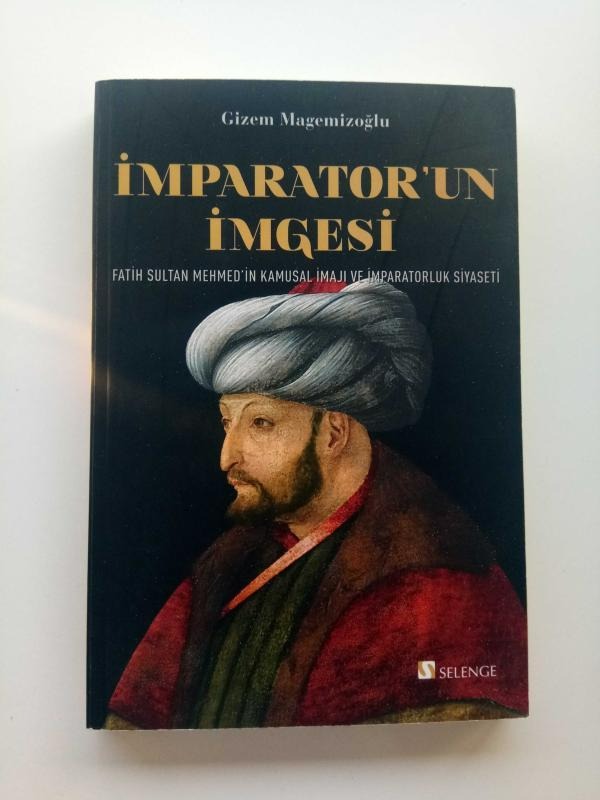
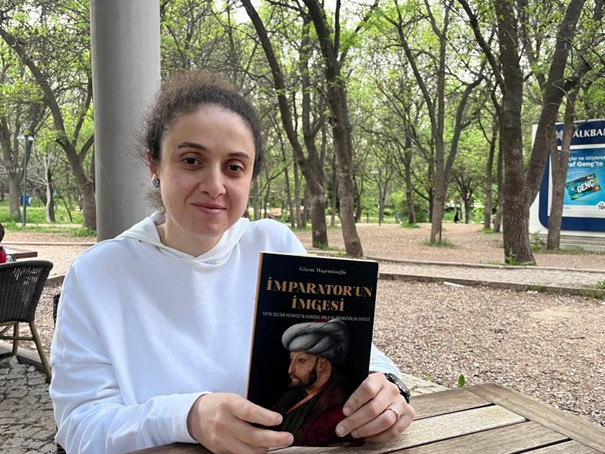
Book: "The Image of the Emperor: The Public Image of Mehmed the Conqueror and Imperial Politics," by researcher and writer Gizem Magemizoğlu.
"I think Atatürk always put Mehmed II in a special place"
Now let's come to the Republican period. What are the views of the founding staff of the Republic, especially Mustafa Kemal Atatürk, about Mehmed II? Was he influenced by him?
I think that Atatürk always put Mehmed II in a special place. For example, in a speech he made in the Parliament, he said: "The city of Istanbul is a blessing from Allah obtained as a result of the endless work and self-sacrifice of our nation." Who owns the success here? Mehmed of course.
In another speech, he said, "Mehmed II is a great man".
It is also known that Mehmed was interested in Ancient Greece and Trojan myths. This information is conveyed by Critobulus, the Greek governor of Euboea Island. When Mehmed visited the ruins of Troy, he said, "The Ottoman Empire took revenge for Troy by conquering Istanbul."
Atatürk also said after the Dumlupınar Victory, "We took revenge for Troy from the Greeks." I think this statement was inspired by Mehmed.
"The claim that the Turks came from the Trojans is a historical fallacy. It is a lie fabricated by some European historians to show the Turks outside of European civilization."
What does Mehmed's statement "I avenged the Trojans" mean historically? Do the Turks really come from the Trojans? Did Mehmed think this way? We know that Atatürk said a similar thing after the Dumlupınar Victory. What is the source of this interesting similarity?
The claim that the Turks came from the Trojans is actually a fallacy put forward by some European historians. This idea was circulated long before the conquest of Istanbul. But those who make this claim also know the fact that the Turks are not Trojans. The purpose of this discourse is to put the image of Turks in the European public opinion into a certain mold.
Why are they making such a nonsensical claim?
European civilization sees itself as the heir of the Greek and Roman civilizations. According to this view, Troy, the enemy of Greek civilization, is also located in Asia. Today, the place we call Asian lands is now Anatolia and Türkiye. Therefore, they try to create a kind of symbolic struggle by comparing the Turks to Troy. This discourse attracted attention especially during the Renaissance period.
"Mehmed the Conqueror and Mustafa Kemal Atatürk similarly said, 'We avenged Troy' after their victories. This is a political and symbolic message"
So, why do Mehmed the Conqueror and Mustafa Kemal Atatürk similarly use the phrase 'We avenged Troy' after their victories? They don't connect the Turks to the Trojans, do they? Can you explain in more detail?
Both Mehmed the Conqueror and Mustafa Kemal Atatürk knew that this claim did not have a historical reality. However, such myths can carry symbolic meanings. For example, Atatürk wanted to give a message by saying "We took revenge for Troy" after the Dumlupınar Victory against the Greek occupation. This is more of a symbolic reference than a historical connection.
Mehmed's Peloponnese Expedition has a similar meaning. He went to the heart of the Greek civilization and gave a symbolic message as "Just as you entered the heart of Troy, I have now entered the center of your civilization". Such statements do not carry a historical origin, but have ideological and political messages.
Although there are almost 500 years between them, can we say that these similar words of both Mehmed and Atatürk show historical consistency?
Yes, this shows us that the comments that are sometimes made to make fun of Atatürk's sun-language theory or other origin searches and to belittle the Republican revolutions are actually applied to the Trojan legend in a similar way. However, this statement of Atatürk is the result of a struggle against the Greek forces occupying Anatolia. The discourse here is more of an expression of a symbolic victory than a direct historical connection.
"Mehmed was a leader who could follow both the East and the West. The most important feature that distinguishes him from other Muslim rulers is that he can follow the West very well."
Could Mehmed's understanding of administration have had an impact on the establishment of the Republic or today's state system? We are talking about different periods, but can there be a historical continuity or effect?
Of course, it would be anachronistic for a ruler in the 15th century to address the 21st century directly. However, there are some important lessons that can be learned from Mehmed. The most important of these is his ability to follow the world in a multifaceted way. Mehmed II was a ruler who could follow both the east and the west at the same time.
So, is Mehmed a 'Renaissance ruler' as claimed in some sources?
No, it may not be correct to call Mehmed a "Renaissance ruler" because the Renaissance is a period specific to Western and Southwestern Europe. However, we can say that in his time, he was one of the three most important rulers in the West. Perhaps he was one of the most powerful leaders of the period, along with the Hungarian and French kings. In the East, if we exclude India and China, he was one of the most influential rulers in the Muslim world.
What was the most important feature that distinguished Mehmed from the Muslim rulers of his time?
What distinguishes Mehmed from other Muslim rulers is that he can follow the West very well. There were Greek and Italian intellectuals in his palace. Ambassadors, merchants, engineers, painters, and scientists were constantly coming and going. There is even talk of a spy network in Italy. Thanks to these connections, he could closely follow the developments in the world.
It is interesting that Mehmed has such a wide information network. What kind of system did he establish at that time? What was the structure in terms of intelligence and communication?
We tend to see the 15th century as a disjointed age, but this is not true. Yes, there was no internet or social media, but people were constantly on the move between different geographies. At that time, it was not as complicated as it is today for a person to leave Istanbul and go to England; at least there was no visa problem.
There were trade colonies in Istanbul. European merchants such as Genoese, Venetians and Florentines lived in these colonies and brought news. Mehmed was learning about the developments in Europe through these representatives. His army included German and Hungarian engineers. There were painters, medallion masters and cartographers who came to his palace.
There were Greek and Italian advisers around Mehmed. For example, these people translated Greek maps into Arabic and presented them to Mehmed. This also shows us the multicultural palace structure of that period.
Were there people from the East as well?
Many people came from the east. For example, Ali Kuşçu came from Turkestan and stayed in Mehmed's palace. Ulama, poets and writers from Iran stayed in the palace. Mehmed tried to turn his palace into a center of knowledge.
These activities were not only for general culture. Mehmed also used these sources of information for political purposes. Even merchants functioned as a kind of intelligence officer. There were no planes, telephones, internet; but there were caravans, ambassadors and constant travels. And of course, the spies...
"Mehmed the Conqueror had an important intelligence and information network in Europe"
Can you give examples of Mehmed's intelligence and information network?
After the conquest of Istanbul, some Christian clergy accused the people of collaborating with Mehmed. Because some of them really wanted Turkish sovereignty. This was an indication that there was support inside. In other words, there was no need for a professional intelligence network. Some of the people came to prefer the Ottoman administration over Catholic rule. The saying "We’d rather see the Turkish turban rather than the Catholic capirote" is an indication of this.
Nevertheless, it seems that Mehmed had an intelligence network in Europe, especially in Italy. For example, he asked the Seigneur of Rimini to send a thinker and some documents. These documents included maps of Italy and the work "De Re Militeri" (The Art of Military). However, this person was later arrested by the Venetians for alleged espionage and his belongings were confiscated.
These events show that Mehmed was not only a political leader, but also a commander who thought strategically on a broad scale. Thus, he was both waging a psychological war and measuring the reactions of the other side. Mehmed controlled not only his own plans but also the perceptions of the other party.
"Mehmed was not only making strategic plans, but also constantly checking the perceptions of the other side"
Can you give examples of Mehmed's strategic plans or how he controls the perceptions of the other side?
For example, the Otranto Expedition is an example of this. It is claimed that the timing of the conquest of Otranto was reported to Mehmed by the Venetians. In other words, Venice may have provoked Mehmed to conquer Otranto. After the armistice after long wars with the Venetians, such diplomatic games could take place. Some Italians even blame Venice for this.
Mehmed had a great command of the geography of Italy. This shows how frightening of a strategic capacity he had. Geography is very important in military strategies. This dominance reveals how far Mehmed went in his plans and how well he studied potential expedition areas.
Mehmed's information network was very strong. He achieved this not only through his friends or diplomats, but also through trade and intelligence. This network was the basis of their conquest strategy.
Can a historical connection be established between Mehmed and Hun Emperor Attila? Is there a similarity in terms of events such as Attila's refusal to take Rome or the letters he wrote?
I have never seen such a connection with Mehmed. But there is an indirect connection between Atatürk and Attila. Atatürk knew the texts written about Attila. He even directly touches on this in the Nutuk. For example, in an incident between him and Nurettin Pasha, when Nurettin Pasha was talking about his noble family, Atatürk reminded him of Attila's answer to the Byzantine ambassadors and said, "I am not the son of a noble family, but the son of a noble nation." This attitude is an indication that the emphasis on nation is prioritized over individual lineage.
This understanding is also close to the philosophy behind the phrase "How happy is the one who says I am a Turk", right?
Yes, we can say that it is a philosophy that can be related to this saying. Although it is not directly mentioned in Nutuk, Atatürk's logic coincides with Attila's response to the Byzantine ambassadors. This shows how much importance he attaches to historical consciousness.
"There was no policy to exclude Turks during the Mehmed period, but Turkishness was not placed at the center of the empire"
What was the reason for the liquidation of some families such as the Çandarlı family during the Mehmed period? Were there political-administrative or ethnic reasons for this exclusion? For example, was this dur to Turkishness as claimed in some sources? Can you evaluate the claims that the Turks were constantly excluded in the Ottoman Empire?
During the reign of Mehmed, there was no policy to exclude the Turks, but Turkishness was not placed at the center of the empire. The dynasty spoke Turkish and wanted to connect his lineage to Oghuz Khan through Kayı Khan. However, this bond is more of a founding myth. In reality, it is not possible to prove that they came from Oghuz Khan with a DNA test.
It is interesting in this context that Timur said to Yıldırım Bayezid, "You are a descendant of an ordinary boatman Turkmen". Timur does not deny his Turkishness, but he belittles his origin. So the root of these discussions is deep. There were Kayıs in Anatolia and maybe they really came from Kayı lineage. But we don't have enough data to prove this.
Such topics are used on social media with one-sentence, context-free comments to manipulate young people. For example, claims are made that Mehmed does not like Turks and that the people of Çandar are heroes. Therefore, it is important that the subject is clarified by experts. Your question is also important in this context, thank you.
Can you explain what was the reason for the exclusion of the Çandarlı family?
Regarding the Çandarlı family, it would be more accurate to say the following first: Mehmed liquidated not only the Çandarlı family, but also the Byzantine ruling dynasties. He did not have a special enmity towards the Çandarlı family, but he had a personal enmity towards Çandarlı Halil Pasha. Halil Pasha contacted the Byzantine ambassadors and gifts were exchanged. This is in line with the diplomatic norms of that time since Mehmed himself was sending gifts to his ambassadors. It would not be correct to call this a "bribery".
Did Çandarlı Halil Pasha try to dissuade the conquest of Istanbul? If so, was he secretly working for Byzantium and had betrayed? Some sources claim that Mehmed was an enemy of him for this reason.
I think he didn't intend to, but he saw it as a huge risk. He may have received some information from Byzantium, but I do not think that there was a direct espionage activity. Mehmed himself may have seen him as "someone I can't work with".
"Mehmed had a personal enmity with Çandarlı Halil Pasha from childhood. It was Çandarlı who dethroned Mehmed when he was little, prepared the Janissary rebellion and dictated a letter for his father to take the throne again."
In other words, rather than a betrayal, did he see him as someone he could not trust?
Yes. So it's hard to call it a "betrayal" in the strict sense. However, there may be a personal resentment for Mehmed. Because Mehmed II ascended the throne as a child and the person who organized his dethronement was Çandarlı Halil Pasha. He organized the Janissaries and made them rebel. After this rebellion, Mehmed had to call his father to the throne again. Therefore, regardless of his situation in the conquest of Istanbul, this event in the past may have had an impact on Mehmed's mind.
So, is the person who dictated the famous "letter to the father" actually Çandarlı Halil Pasha?
Yes. Even Mehmed's suggestion to "lead the armies", which was presented as if it were Mehmed’s own idea, may have emerged under his guidance. This is an issue that can touch the pride of a proud and sometimes arrogant ruler like Mehmed. Imagine, you have someone who forced you to write letters as a child executed years later. This is not something that a character like Mehmed can easily digest.
The Çandarlı family has been influential in the administration for a long time, hasn't it? Did this influence completely end with the execution of Halil Pasha?
The Çandarlı family was one of the oldest and most influential families in the Ottoman state. After the execution of Halil Pasha, the family did not disappear completely. During the reign of Bayezid II, a member of the Çandarlı family was appointed as the grand vizier again. However, the family later settled in Iznik and became one of the leading families there. Cengiz Çandar of today’s fame also belongs to this family.
So they settled in Iznik and never left?
Yes, they did not leave Iznik much until the Republican period. The execution of Halil Pasha and the confiscation of the family's properties had a deep impact on them.
So, was there any uneasiness when Mehmed conquered Istanbul? Was there a risk in Mehmed's mind that Europe would unite and organize an expedition against the Ottomans?
We can definitely think that such calculations are made. Just like in the 1974 Cyprus Peace Operation, the potential international reactions may contribute to decision making. The possibility of a Crusader attack from Europe increased the difficulties of the decision to approve the conquest. These strategic concerns were very important for Mehmed.
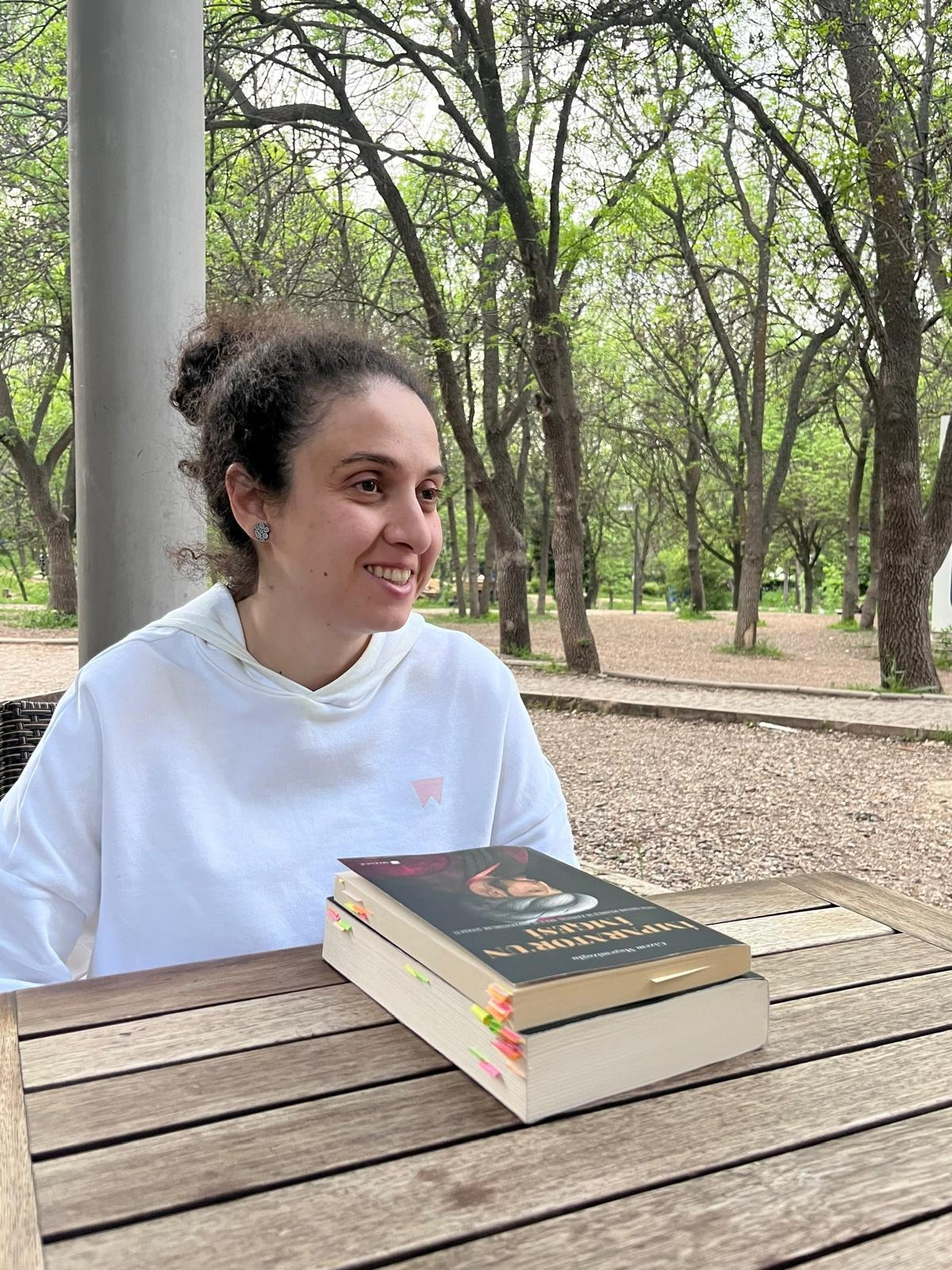
Photo 2: © Center for Public Policy, State Administration and Social Development (KAPDEM), 2025. All copyrights reserved.
"Mehmed the Conqueror is one of the rare historical figures embraced by both right and left circles in Türkiye"
How is Mehmed the Conqueror evaluated by the Turkish left and the Turkish right today? Do you think these perspectives are correct?
Mehmed the Conqueror is one of the rare historical figures embraced by both right and left circles in Türkiye. The Turkish left sees Mehmed as a progressive ruler. They think that he is the founder of the atmosphere of tolerance in the Ottoman Empire. An example in this regard is Bülent Ecevit's article titled "Mehmed, Forgive Us!" written in 1955. This article was written after the events of September 6 and 7, 1955. Ecevit expressed his regret for this injustice to the legacy of Mehmed, who built the culture of living together in Istanbul.
As for the Turkish right, especially those who cannot internalize Mustafa Kemal Atatürk and his revolutions position Mehmed as an alternative founding figure. This is an ideological position aimed at diminishing the values of Atatürk and the Republic, rather than understanding the historical role of Mehmed. However, in my opinion, this means being unfair to historical figures. Because, just as Mehmed provided legitimacy with the conquest of Istanbul, Atatürk established a similar historical legitimacy with the national struggle.
Isn't the acceptance of reforms such as the Alphabet Revolution also related to this legitimacy?
It certainly is. The Alphabet Revolution is a great success in my opinion. Atatürk going from province to province and explaining this reform to the public is directly powered by his founding identity. Because the people believed in the hero of Çanakkale and the National Struggle. If someone else had tried to carry out these reforms, they probably would not have been accepted in such a short time.
"We should appreciate Mehmed, but it is not right to underestimate the National Struggle and Atatürk while praising him. Some sections of the Turkish right embrace Mehmed with this approach rather than understanding him, and they should abandon this."
The literacy rate was already very low in the Ottoman period, wasn't it?
Yes, that's right. These low rates increase the importance of the alphabet reform even more. In addition, the criticism of "I can't read my grandfather's grave" is anachronistic. Because many people could not read the old script anyway. We cannot read the Orkhon Inscriptions either, but this is not the fault of the language revolution. Of course, we should appreciate Mehmed. However, it does not seem right to me to belittle the National Struggle and Atatürk while praising him. I hope that some sections of the Turkish right will abandon this approach.
How do you evaluate Bülent Ecevit's article "Mehmed, Forgive Us!"?
The period in which this article was written is very important. Ecevit writo this article on September 9, 1955, right after the September 6-7 Events. At that time, atrocities were committed against non-Muslim citizens in Istanbul. There are incidents such as rape and murder and there are also allegations that it is a state operation. After these shameful events, Ecevit thinks: "How did we, as the grandchildren of a ruler who made Istanbul a city where different societies could live together, do such a thing?" This is actually the summary of the article: "Mehmed, Forgive Us!"
It is known that Mehmed stopped the looting on the first day after conquering Istanbul. There was a management approach that protected the property and lives of non-Muslims. He wanted to make Istanbul the capital and make it a universal center. In addition, attacks against non-Muslims increased immediately after Mehmed's death. Looking at this historical vision, Ecevit emphasizes that it is a great shame for Mehmed's grandchildren to behave in this way.
How do you think Mehmed would have viewed this conflict if he had seen the September 6-7 events? Was his embrace of different ethnic and religious identities a tolerance or a vision of a new empire? We also know that the suspension of the right to plunder after the three-day conquest caused reactions.
I don't think Mehmed would turn a blind eye to such a conflict among his people. Is it because he is a humanist? Maybe partially. But more because he did not want Istanbul and its order to be harmed. Of course, this does not mean that he is a complete "human rights defender". As a matter of fact, it is known that he beheaded three thousand people when he was very angry. After all, he was a ruler of the Middle Ages. But we can say that he wanted different communities to live together without being harmed.
You said that the left also embraced Mehmed because of his tolerance, progressiveness and granting the right to live to different identities. Some historians, especially some people who present themselves as on the left, focus only on the fratricide issue and show Mehmed almost as a murderer. Do you think this represents the leftist view?
Historiography is ideological in nature. This is true for both the right and the left. There are also factions within the left. For example, the center-left (Ecevitist line) and the more radical socialist line may approach Mehmed differently. Some leftists embrace Mehmed as a progressive figure open to cultural and artistic development. Because leftism cares about progress. Mehmed is also seen as a forward-looking ruler for the 15th century.
On the other hand, for the right, Mehmed is a figure representing Turkish traditions. Some right-wing circles, who think that Atatürk's reforms have broke us off with the past, see Mehmed as an alternative founding leader. However, it is not healthy to show these two figures as rivals from a historical or political point of view. If we bring today's debates to figures like Mehmed or Alparslan, it would be a failure to understand their historical context. If you told Alparslan about today's political discussions, he probably wouldn't even take you seriously.
"There are differences in the perspectives of nationalists, Turkists and Islamists in Türkiye towards Mehmed. However, politically, we can talk about the recent overlap in the approach of nationalists and Islamists."
Do Turkish nationalists and Islamists look at Mehmed in the same way? Or are there differences between them?
Yes, there are definitely differences. However, I do not think that the nationalists today have a very different perspective on history from the Islamists. Over time, these two lines have come closer to each other.
Can you briefly summarize how did nationalists and Islamists view Mehmed? How did the perception of these two groups coincide over time? What are still the differences?
Both nationalists and Islamists have a positive view of Mehmed the Conqueror. They do not have a very negative attitude even on issues such as fratricide. But the main emphasis in their gaze is different. For nationalists, Mehmed is a figure who shaped Turkish national identity. They define Mehmed through Turkishness; they see it as a part of the ideal of Turkish World Domination. Islamists, on the other hand, consider him a Muslim leader, a religious leader.
The expressions nationalist, idealist or Turkist can have very different political meanings in Türkiye. Followers can also define themselves differently. For this reason, we would like to ask more subjectively by repeating: How did Nihal Atsız and other Turkists approach Mehmed? Later, how did the nationalists who made the Turkish-Islamic synthesis start to look?
Turkists generally have a positive view of Mehmed II. They appreciate his interest in culture, art, and knowledge. They consider the conquest of Istanbul as a great event that "opened and closed an era".
Islamists, on the other hand, associate the conquest of Istanbul with the hadith of the Prophet Muhammad: "Istanbul will definitely be conquered. What a beautiful commander is the commander who conquers it, what a beautiful army is the army that conquers it" For this reason, they embrace Mehmed as "the person praised by the prophet". Nationalists do not reject the Islamic aspect, but they interpret Mehmed with a reading based on Turkishness. Nationalists, on the other hand, have varying tendencies between these two, but since they are also seen as part of a political movement, we can say that divisions have increased, and even their perspectives have diversified, such as the old and new generations of nationalists.
So, is this hadith authentic? Or could it have been fabricated by the Umayyads, as some claims say?
I looked at the comments of the Presidency of Religious Affairs and some theologians on this issue. This hadith may not be fabricated, but it is not very probable either. It is one of hadiths that we can say "Not impossible, but not very probable either". We cannot clearly say that it was fabricated by the Umayyads.
"In Turkish and Steppe societies, the right to rule was considered to belong to a few lineages. For this reason, the 'blessed lineage' and being included in one of those lineages were very important in order to produce legitimacy and consent to dominance."
Finally, speaking of Turkishness, you mentioned the Oghuznameh tradition before, can you elaborate on this?
We already had an existing Oghuznameh tradition in Anatolia. However, the encouragement of this tradition by the Ottoman dynasty began during the reign of Murad II. At that time, Murad II was still afraid that Timur's son Shahrukh would come to Anatolia. Timur is considered the heir of Genghis Khan. There are several lineages that have the right to rule in Turkish and Steppe societies: Such as the Ashina family, the Tuku tribe of the Huns... The descendants of Genghis Khan are considered blessed.
If the Ottoman dynasty had ended, there was even an idea to bring the grandchildren of Genghis Khan from Crimea and place them on the throne. This understanding of "blessed lineage" was very strong.
At this point, another important lineage is the Oghuzs. There is a line descended from Oghuz Khan. Not only Oghuz Turkish speakers, but also Uyghurs have adopted the Oghuz Khan epics. Murad II and his entourage also base their search for legitimacy on this tradition. This process continued during the reigns of Mehmed II and Bayezid II.
We don't see this approach much during the periods of Osman, Orhan and Murad I, do we?
Yes, our historical sources are quite insufficient for that period. That's why we can't say for sure, but we don't have enough data.
Can it be said that they did not feel such a need or obligation at that time?
Maybe. For example, I don't remember exactly if it is mentioned in Ahmet Emin's "Iskendername" but there is an expression in which Timur says, "You are Turkmen". In addition, as I mentioned in another study, according to academician Necati Demir, there was a serious interest in Turkishness and the Turkish language during the reign of Murad II. In other words, there is not only the Oghuz tradition, but also an encouragement for Turkishness and the Turkish language. He even says that some activities can be considered within the scope of "Turkism".
However, I think that one should be careful when using the term "Turkism". Because Turkism is a concept that gains meaning with modern nationalism. Therefore, it may not be very healthy to call the past Turkism by looking at it from today's perspective. But we cannot deny that there was an interest in Turkish identity and Turkish language at that time.
There is also the story of Selçukname during the reign of Murad II. Do you think this is to connect the Ottoman family to a noble Oghuz lineage?
Yes, Murad II dictates a "Selçukname" to Yazıcızade Ali. This work consists of a series describing the Anatolian Seljuks. However, another section is added that is not in the original text. According to this addition, the Oghuz tribes gather and organize a large congress as per the tradition and elect Osman Bey as the Khan. This could also be a fictional historiography. Murad II either wanted this to be written or approved it after it was written. In any case, this appears as a search for legitimacy.
This also means that other principalities accept the superiority of the Ottomans or claim superiority over Timur's lineage.
Is there also an aim to exclude the Seljuk State by creating a perception?
In the same work, the right and left organization of the Oghuz tribes is also mentioned. Kayı Khan, one of the Oghuz Beys, is shown as the lord of the right arm. The right side is sacred for the Turks and the bey at the head of the right arm has the right to rule. Since the Ottomans are based on Kayı Khan, they position themselves as the natural owners of this sacred right to rule. The Seljuk family, on the other hand, belongs to the Kınık tribe and is considered to be in the background because it is located on the left arm. In this context, there is a direct understanding of "We are superior to the Seljuks". Our lineage is deep-rooted and the right of administration among the Turks belongs to Kayı Khan and Oghuz Khan. There is the idea that we come from this lineage.
Mehmed the Conqueror continues this tradition in his own code. He puts into practice the "Orun" and "Ülüş" system in the Oghuz tradition.
"During the Mehmed period, the 'Orun' and 'Ülüş' system in the Oghuz tradition was re-implemented with new mechanisms in administration"
What are Orun and Ülüş?
Let me explain simply: Oghuz Khan ranks the beys and sons around him according to their success in wars and their behavior in daily life. The person sitting in the first row eats the best part of the animal. This shows the hierarchy between tasks. Mehmed continues this in a different way and arranges the seating arrangement of the statesmen, the distribution of authority and their places at the table according to this order. In other words, this system is an Oghuz tradition carried to the 15th century.
In other words, rather than the merit of individuals, a power is now attributed to the authorities themselves?
Yes, but this order of office is also determined according to the Oghuz tradition. I think this ranking is made by looking at the Oghuznameh. In fact, in addition to me; Mr. Bahattin, who is an expert on this subject, also has the same opinion.
So what were the reasons for the Oghuznameh to be written?
Murad II was a sultan who was interested in history. Oghuznames already existed from the 10th and 11th centuries. Murad II had the Persian Selçukname translated into Turkish. He encouraged the translation of Arabic and Persian texts into Turkish. He supported the authors financially, almost like today's research grant. Selçukname also includes Oghuznameh fragments. However, some sections are not in the original texts, they were added later. I think these additions were made to strengthen the political legitimacy of the palace.
Is the palace dictating these historical narratives and texts?
Yes, the palace dictates. Or it approves and allows the texts that have already been written by saying "This is appropriate". The palace accepts Oghuz Khan as the starting point in historiography.
Ms. Magemizoğlu, thank you very much for taking the time to answer our questions within the framework of your book "The Image of the Emperor: The Public Image of Mehmed the Conqueror and Imperial Politics" and for this valuable interview. It was an eye-opening interview for our readers, shedding light on both historical and current debates.
Thank you. I find it extremely valuable that this interview is an occasion to discuss the historical issues related to Mehmed II and his period and the reflections of these issues on the present day. I wish you success in your work.