
After Henry A. Kissinger: Two Special Memories of Türkiye
I worked and had private conversations with Henry Kissinger, an American diplomat who passed away on November 29, 2023, and who held important positions such as the US Department of State and National Security Advisor, in various meetings during my tenure at the Turkish Ministry of Foreign Affairs. I would like to share some notes on the content of two private meetings in 1994 and 1976 in order to commemorate Kissinger on the occasion of his death. In fact, since we talked about the anecdote about our memory in 1976 during the meeting in 1994 with the reminder of the prime minister of the time, Tansu Çiller, I will explain two special memories for the first time here.
On a May day in 1994, Ahmet Ertegün from New York called me on the phone in my office at the Prime Minister's Office. Since October 1993, I have been working as one of the chief advisors to Prime Minister Tansu Çiller in the Prime Ministry's annex building in Gaziosmanpaşa, Ankara. I knew Ahmet Bey from my last foreign assignment in Washington. Ahmet Ertegün, one of the distinguished and influential figures of the Turkish community in the USA, was in contact with our diplomatic missions in Washington and New York.
Ahmet Bey stated that he would host Henry Kissinger at his house in Bodrum in the summer of 1994, that Kissinger wanted to meet with Prime Minister Çiller on his arrival in Türkiye, and that if such a meeting was possible, he would stop by Istanbul on his way to Bodrum or on his way back.
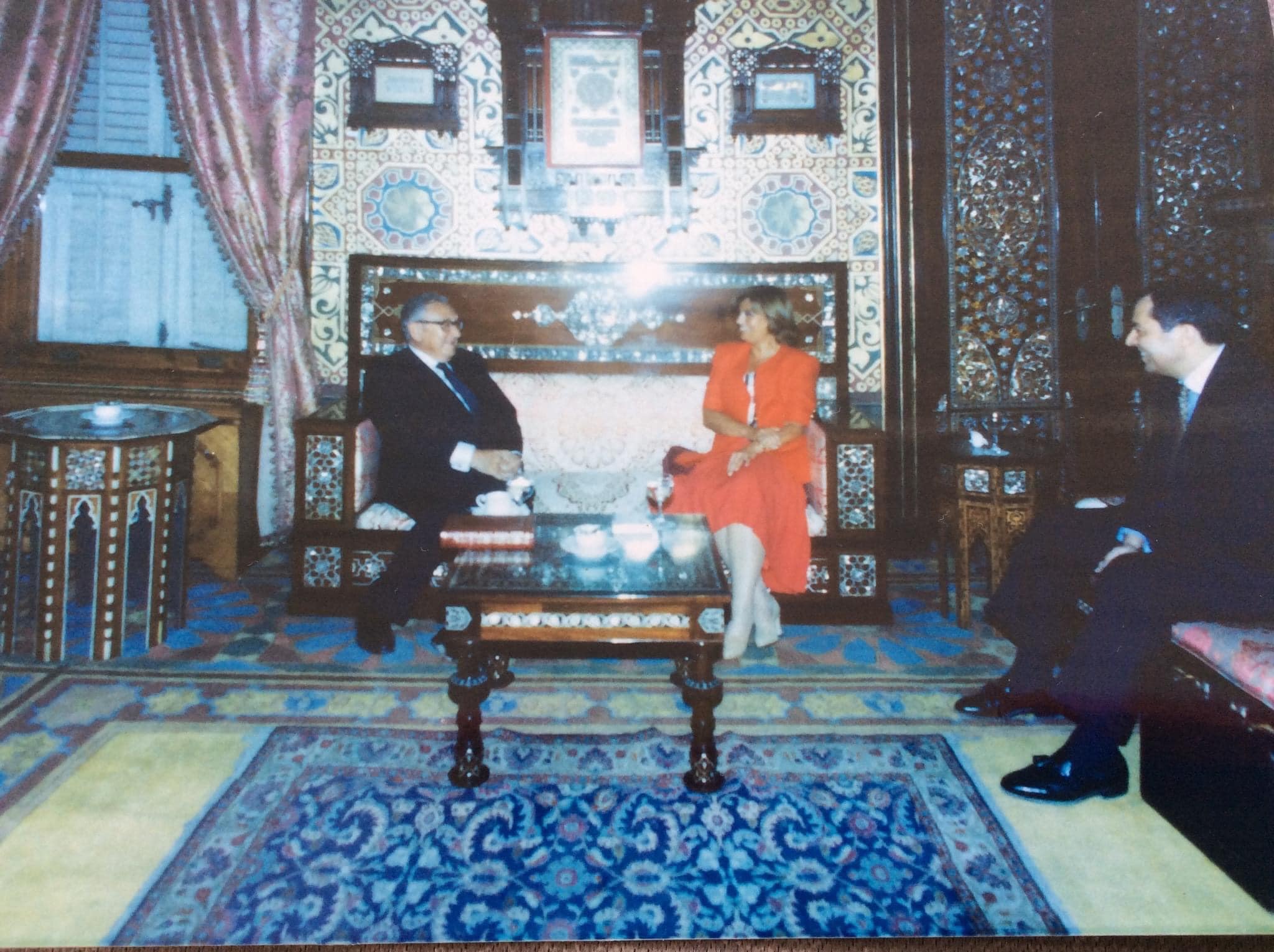
Upon Prime Minister Çiller's positive response to the meeting, Kissinger visited the Prime Minister at the Müşir Fuat Pasha Mansion on the Bosphorus. Kissinger started the meeting, which lasted nearly two hours, by saying that as a friend of Türkiye, he wanted to share some of his views and suggestions at a time when the Cold War had ended with the West victorious and a new international order emerged.
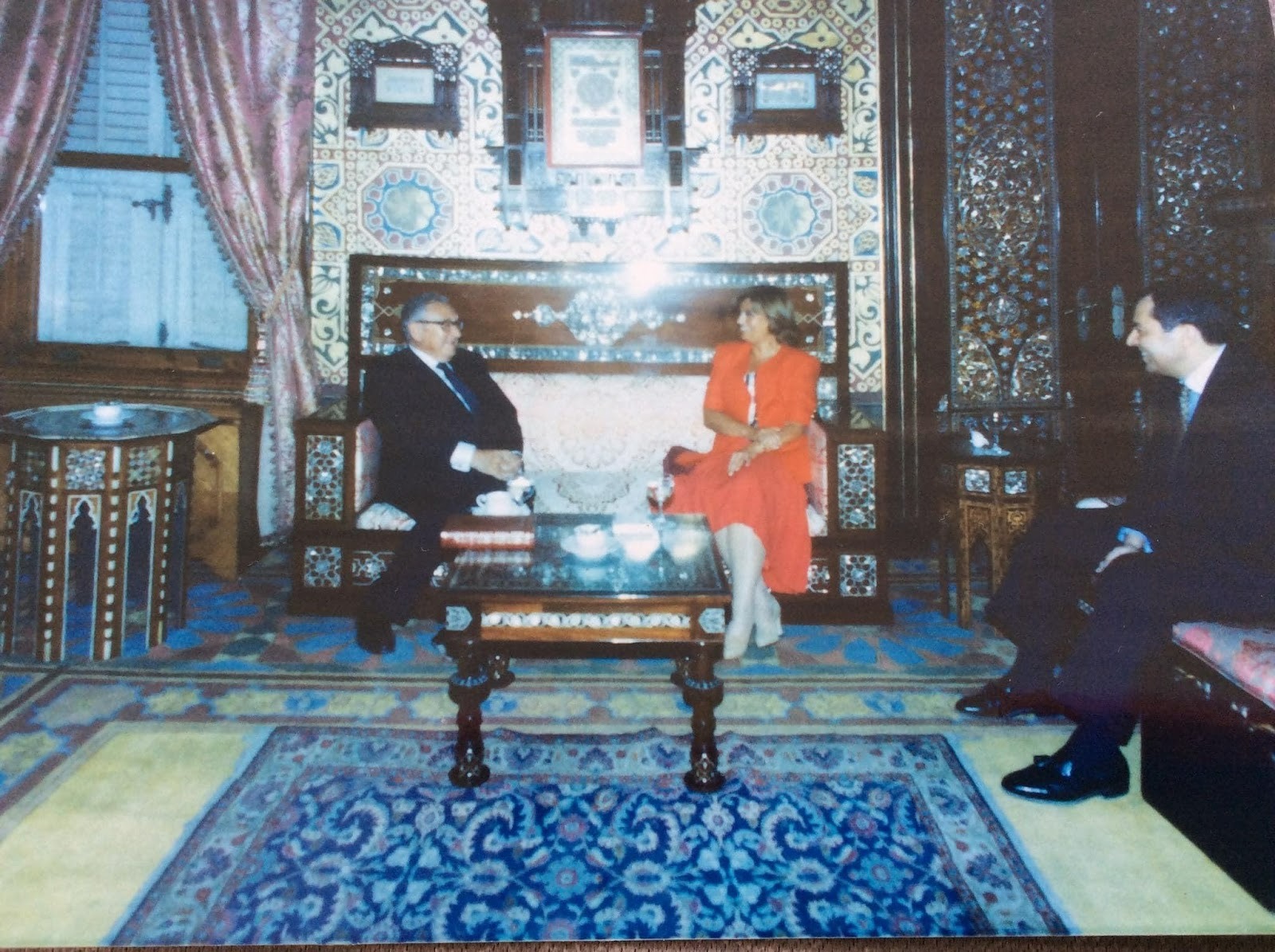
Special Photo: Henry A. Kissinger, Tansu Çiller and Daryal Batıbay (from right to left) Müşir Fuat Pasha Mansion, Istanbul. Source: Private Photo Copyright: © KAPDEM (Center for Public Policy, State Administration and Social Development), 2023 (with special thanks to Daryal Batıbay).
Kissinger stated that Türkiye's role as an outpost for the Western alliance during the Cold War years will weaken in the new international order, so he wishes Türkiye to remain an important international actor by assuming new roles and expressed the following points:
"In this respect, I see your being the prime minister as an opportunity. If you support your identity, which arouses interest in the West, with the policies you will follow, you can make your country an important player after the Cold War. For this, it will be very useful to develop your democracy and economy. In my opinion, the most serious hindrance to Turkish democracy is the Kurdish problem. I know that PKK terrorism is a serious problem for your security. However, it has not been possible to solve ethnic problems involved in terrorism by military methods in any country. The solution to these problems is to include the ethnic communities in the country in democratic politics. With these thoughts, I must say as a friend that I consider the arrest of Kurdish deputies from your Parliament a few months ago as a wrong step."
In addition, Kissinger noted with satisfaction Çiller's statements to strengthen the market economy and believed that it was necessary to continue the reforms initiated by Turgut Özal; he insisted on the recommendation of strengthening relations with the European Union (EU) for both economic and political reforms. Due to the desire of the new democracies in Central and Eastern Europe to join the EU, Kissinger recommended that Prime Minister Çiller personally undertake this issue in order for EU's membership promise to Türkiye, which dates back to the 1960s, to not fall behind in the European agenda, and that we can be sure that the US administrations will continue to support Türkiye's EU membership process, that there is a non-partisan consensus in the USA on this issue, and that since Germany has both ties with Türkiye and is the most influential member within the EU, he stated that their support will be critical.
Prime Minister Çiller, after thanking the friendly advice and briefly stating that she had taken note of what Kissinger said, wanted to change the content of the meeting and said, "Before our meeting, my advisor Daryal Batıbay told me a memory from the 1970s, I would like him to remind you too."
Thus, in the last part of the Kissinger-Çiller private meeting, the floor was mine.
In the summer of 1976, Greece complained to both the United Nations (UN) Security Council and the International Court of Justice, claiming that Türkiye's seismic surveys in the Aegean Sea violated its continental shelf. Upon the meeting of the Security Council in August, US Secretary of State Kissinger invited his Turkish and Greek colleagues to New York, almost seizing the tension between the two NATO members in the Aegean. The meeting of the late Foreign Minister İhsan Sabri Çağlayangil with Kissinger at his hotel in Manhattan was attended by the UN Permanent Representative İlter Türkmen, the late Necdet Tezel, the Director General of Foreign Affairs and Political Affairs, and I as the Minister's interpreter.
Kissinger came to the meeting with a tense face and said, "Conflict between two NATO members is unthinkable; the USA is determined to prevent such a development, if necessary, we will deploy the 6th fleet in the Mediterranean to the Aegean and separate you," and in the meantime, he hit the glass coffee table between him and the Turkish delegation several times. He said that he had invited Çağlayangil and Greek Minister Dimitrios Bitsios to New York in order to find a peaceful solution to the Aegean problem, and that he would meet with Bitsios to learn the Greek attitude after listening to Turkish opinions, and said, "I am listening to you."
This unexpectedly harsh attitude surprised the entire Turkish delegation. Our Minister Çağlayangil turned to us and said that this style was incompatible with diplomatic traditions and then started to explain Turkish views on the Aegean. He stopped at the end of each sentence, and I was translating. As he spoke, Çağlayangil's tone started to harden and towards the end he said, "The Greeks think that the whole Aegean belongs to them, they will almost ask us for passports when we swim in Bodrum or Çeşme. We will never allow these Greek dreams," he said, and slammed his fist on the glass coffee table in front of him, a little harder than Kissinger.
When Çağlayangil's statements ended, silence reigned in the hall. While Kissinger was waiting for him to say something, he prolonged his silence for a while, then got up, walked around the glass coffee table, came to Çağlayangil and touched his shoulder a few times with his hand and said, "Tough guy, aren't you?" There was laughter from both sides in the hall, Çağlayangil was looking at me with an expression trying to understand what was happening. I translated what Kissinger had said. Afterward, Çağlayangil's facial features also softened, he turned to us and said, "He has been playing a role for us since he came."
When the meeting was over, the two ministers walked in front of the Turkish, Greek and American journalists waiting for them. Kissinger stated that he had discussed the Aegean problem with his Turkish colleague and that he would go to discuss the same issue with the Greek minister, and after a pause, he said, "I will then go and see my psychiatrist," and laughter erupted from the journalists. I translated into Çağlayangil's ear word-for-word but when the minister said "what does that mean," I said, "Turks and Greeks are driving me crazy." Çağlayangil turned to Mr. İlter, who was standing next to him, and said, "This man is interested in juggling."
Kissinger liked this memory I told very much, he laughed a lot. At one point, he said he wanted to use it with my permission and took note of my name. He stated that he could not take a vacation in August 1976 due to the Aegean crisis, but with the support of Britain, the term president of the Security Council that month, they achieved good results and calmed the Turkish-Greek tension.
I reminded him that we share this assessment and that with the Security Council Resolution 395, the two countries were called to refrain from unilateral actions in the Aegean. In addition, in accordance with this decision, I said that Türkiye and Greece complied with the moratorium they undertook with the Bern agreement signed in 1976, and although the problems in the Aegean were not resolved, tensions were prevented, except for the one in 1986.
While Prime Minister Çiller had told me before the meeting that she would have Kissinger for dinner, she gave up this idea after the meeting and saw off her guest from the mansion on the Bosphorus.