
What is Metaverse: How Will Social Life and Management Systems Change in the New World? (Part 2)
Introduction
In the first part of the article, we examined what the Metaverse is, how it emerged, how it was used in the past, what it means today, and how it differs from other digital applications and virtual environments. In the second part, we will make a detailed examination of when the Metaverse will happen, what are the necessary conditions for its realization, the problems and obstacles that may arise while the Metaverse is developing, the possible negativities it will bring in terms of security, economic and ethical rules, especially from data collection, to the positive developments that the Metaverse will add to our lives. We will examine how it will change both our lifestyles, social relations, social order and state management systems.
When Will the Metaverse Take Place?
There are 3 main elements for a technology to become widespread: Demand, software and hardware. When the qualifications in these three are met, it will now be possible to move to the Metaverse.
Demand
In 1995, the internet reached its critical level with 14 million people and was rapidly progressing towards becoming popular. Today, there are almost 2 billion daily online users. The global online gaming industry, which experiences virtual worlds every day, was valued at $150 billion last year, up from just $41 billion for the entire film industry. While 44 million people watched the World Championship held in the virtual game League of Legends, this number was 7.5 million for the NBA finals. In other words, there is already a great demand for the virtual world.
Software
While the internet relies on codes to create websites, metaphors are built with engines that create 3D worlds. The two biggest game engines, Unreal Engine and Unity, are already billion-dollar toolkits. Unreal Engine is increasingly being used by Final Fantasy, Microsoft’s Gears of War, and top Xbox and PlayStation games, as well as Hollywood movies, to create hyper-realistic special effects.
On the other hand, the Unity engine is what Facebook built the Facebook Horizon platform on, and it is the engine used in League of Legends, Pokémon Go, and many other games. It is also used in mobile AR/VR games and include everything from Activision's Call of Duty to Nintendo's Super Mario Run. Basically, Unreal and Unity are platforms like iOS and Android when it comes to game development, and they are multi-billion dollar software libraries when it comes to visuals.
A few months ago, Epic and Unity revised their engines for the next era of entertainment. Epic Games, known as the creator of Fortnite Battle Royale, increased the company's value to $17 billion with a financing of $1.8 billion. There is also an investment by Sony's PlayStation company in Epic. With the launch of the PS5, Epic Games wants to use this new funding to play a leading role in the development of the so-called Metaverse platform and the expansion of games to cross-platforms for new types of social and entertainment experiences. This vision of the metaverse can grow from the entire global video game community to the entire global Internet-connected population.

In terms of software, we actually have sufficient infrastructure. Likewise, with microservices that bring together different software platforms, it doesn't really matter which software you use. Because all these different softwares interact with each other without any problems with microservices. The exponential increase in the number of software developers in the world also shows that we are in a very competent position in software.
Hardware
We have also entered a rapid development process in terms of hardware. Players access virtual worlds in three main ways: 35% mobile, 30% game console, and 25% PC. All three are growing in power and speed, and when 5G becomes available, it will increase mobile speeds by up to 100 times. A project fast enough to create a seamless connection between the physical world and the Metaverse. Everyone is racing for faster, cheaper wearables to access Facebook, Oculus, Microsoft Holo Lens, and Sony's PlayStation VR Metaverse.
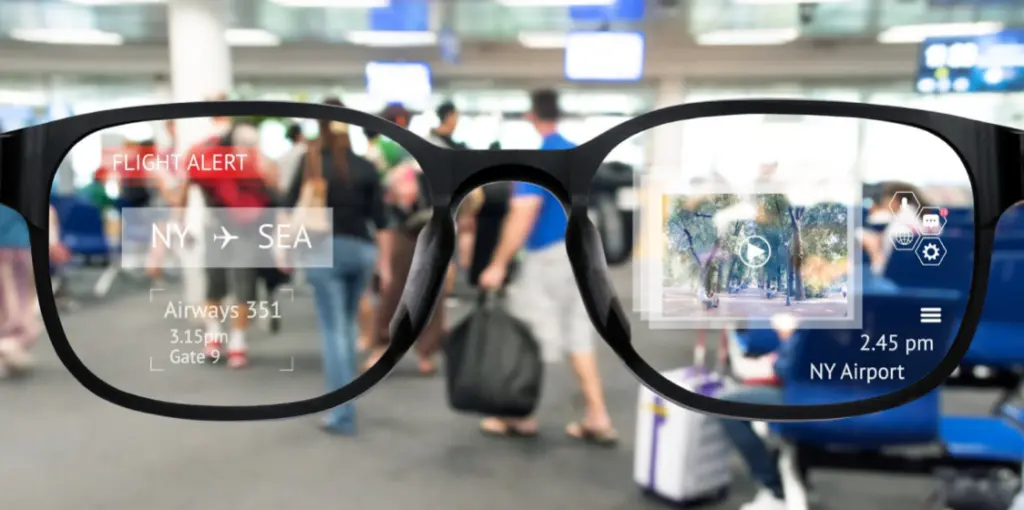
In addition, wearable devices are also developing very rapidly. Patent applications and studies on smart glasses are accelerating day by day. Apple is likely to launch Apple Glass Augmented Reality glasses by 2026, and Amazon has already released it. The Alexa-powered Amazon Echo frameworks, which are already available by invitation, are currently being used by testers. In a few years, virtual reality glasses like these will begin to replace mobile phones in a lightweight portable way.
Likewise, our interaction with smart watches is increasing day by day. Now, investment in wearable technology is increasing in every field. Under Armour's running shoes with a smart chip installed inside are a good example of this. Thanks to the smart chip inside, it counts the steps you take, calculates the time you start running, the step interval, step height, your speed and can give you a detailed running analytics.
As a result of the integration of smart chips with wearable technology and the fact that smart chips are getting smaller and more powerful every day, lighter and higher processing power devices are entering our lives.
Although we are not at the desired point in terms of the smart technology required for the metaverse, it is inevitable that this technology will reach prices that can be purchased by everyone in the not too distant future.
Obstacles to the Metaverse
In summary, Metaverse is the use of many platforms at the same time on a single network without switching from platform to platform, where a user can interact with their Avatar, that is, their image, in the virtual environment. This is exactly where the problem that the Metaverse needs to face begins.
If we list the problems;
- Data security / Cyber security
- Cross-platform verification
- Processing data
- Economic problems
- Ethical issues
It is necessary to elaborate a little under each heading:
Data Security / Cyber Security
Today, 4.8 billion people use the internet. And an average of 2.5 million terabytes of data is produced every day. While the amount of data in the world was approximately 44 Billion Terabytes in 2020, this number is expected to be 175 Billion Terabytes according to 2025 estimates. The amount of data obtained is enormous. The more we move our private lives to the virtual environment, the more data we produce.
Algorithms developed on the data produced can conduct social analyses. The movies you watch, the music you listen to, the games you play, the emojis you use while texting, your writing style, your clothing style, and the colors you choose play an important role in defining you. The more data we master, the more accurate definitions can be made.
What I mean by defining you is that it can reveal with high accuracy what your political views are, what you like, and your sexual orientation that you may not even admit to yourself. To give a detailed example in this regard, the story of Target Company, one of the important retailers of the USA, is really important. The company wanted to make sense of the data it collects about its customers by assigning a 'Guest Identification Number' linked to each customer's credit card, name, or email address. Thanks to these numbers, it started to collect all the shopping history and demographic information of the customer. It started to use the data it collected to make meaningful suggestions to its customers.
As a result of the analysis of the expenses of the people registered in the company's baby department, it was noticed that women who were expecting a baby bought a lot of unscented lotion in the second quarter of their pregnancy.
Another finding about pregnant women as a result of the analyses was that women loaded up on calcium, magnesium and zinc supplements around the first 20 weeks.
On the other hand, if customers usually buy soap and cotton, but suddenly buy hand sanitizer and washcloths with unscented soap and lots of extra cotton, this could indicate that birth was approaching.
The company then started sending coupons to users it considered pregnant. One of the coupons was sent to the daughter of a conservative father living in the city of Minneapolis. The girl was still in high school, and because such a thing was sent to his minor daughter, the father went to the company and got into a furious argument.
The manager said they would investigate the situation and return to the father. After investigating the situation, the manager found that the girl had indeed been sent pregnancy-related vouchers. The manager then called the father and wants to apologize, but in the phone call, the father said, "I talked to my daughter. She was doing things behind my back. She will give birth in August. I owe you an apology." As a result, Target becomes aware of a pregnancy that even the girl or her father is unaware of, thanks to the data collected.
The summary of the story is that the more data collected about you, the better they can identify and guide you. Your shopping preferences and expenses, your political preferences can be shaped in a desired way, and your social perception can be changed with subliminal messages given to you.
In the metaverse, the size of the data to be collected about you will be greater than the total of Facebook + Instagram + Google Maps + DoorDash + WhatsApp + Banking + Netflix. In short, since you can do many of your things in the Metaverse, the data that will be collected about you will be greater. As a result, the predictions about you will be just as precise.
It is very important where to store such a large amount of data and how to keep it safe. Governments will not want to give the data out, and they are right. It could turn into a national security problem. However, in the face of developing technology, there is not much that governments can do other than adapt.
It does not seem possible to transfer or control the Metaverse infrastructure to a single company or government. No one will want to give this kind of power to one side. A data of this size would be a more effective weapon than the nuclear stockpiles of the US and Russia.
A different protocol needs to be developed for storing data. Blockchain technology can be useful in this regard, because the protocol that needs to be developed must be absolutely decentralized.
Cross-Platform Verification
We talked about the concept of cross-platform in the metaverse. You can perform your transactions at the bank with an ID card that identifies you in the physical world. To connect to a social network such as Facebook, your e-mail account and password are used, and to connect to WhatsApp, you connect by verifying with a short code sent to your phone.
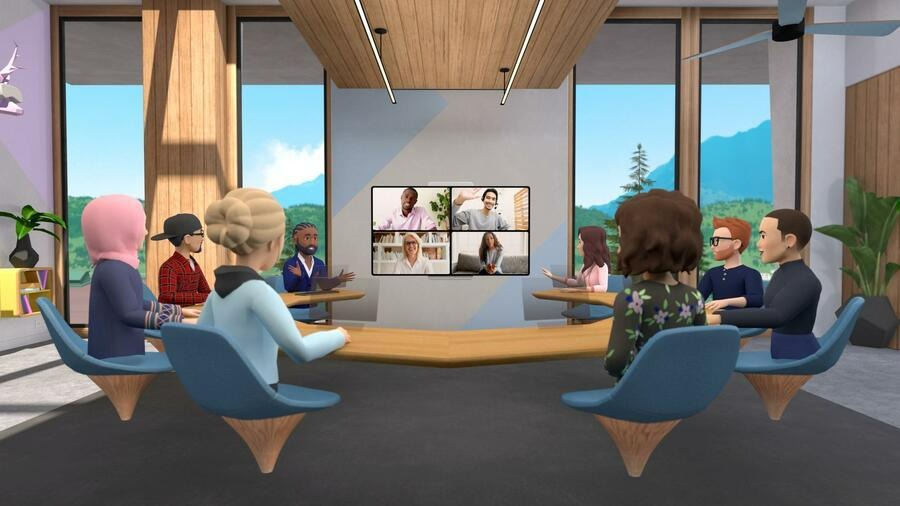
In the metaverse, the situation becomes a little more complicated. While verification is done with the membership system on online platforms, it will not be very convenient to use the same for Metaverse. Assuming that the damage you may experience in case of stolen password will be much greater than losing an e-mail account, a different verification is needed.
Many problems may arise in identity verifications. First of all, governments will not take kindly to situations such as uploading identity information to the platform. The most realistic solution to solve this problem would be two-step verification. One of the steps must include biometric encryption. For this, entries made using the person's biological characteristics, such as fingerprints or retinal scans, can be used. In addition, a password can be used as a layer. However, a simple password-message authentication like when you log in to your Gmail account will no longer provide a sufficient level of security for the Metaverse.
Processing Data
We talked about how huge the data to be obtained is. In order to process such a large amount of data and to present the visuals to be created in the same way to millions or even billions of users at the same time, supercomputers are needed to process the data.
Likewise, it will be necessary to create huge data pools to store the data. With the spread of the Metaverse, the data to be obtained will increase exponentially and it will be very important to store the data to be obtained unchanged. Blockchain technology is envisaged as the most ideal formula for this. In fact, a virtual universe game called Decenterland has already been created. In this universe, you can buy your own land, decorate houses, and even pay for it with a cryptocurrency called MANA. The house, land or item you buy is processed on the Blockchain as crypto on your behalf. Since blockchains are formed by processing data sets one after another, the other chain added after each chain further increases the security of the previous chain ring. In other words, the more data is processed on the blockchain, the safer your data is.

In fact, although this may seem like a very safe method, every good thing comes at a price. Although these types of blockchain algorithms are very secure and decentralized, they are slower and more costly than normal databases in terms of storage costs and transaction calculations.
It would be more appropriate to use a hybrid storage system here. It will be in the form of storing only the important data on Blockchain and storing less important data in classical database systems.
Economic Problems
It is certain that the Metaverse will permanently change many elements, from our shopping habits to our holiday habits, from our passion for cinema and cafes to the business world:
- For example, if you want to go to Paris on your honeymoon with your spouse and visit the Eiffel Tower, you will no longer need to buy a plane ticket. You will be able to visit from your home much more comfortably with virtual glasses, take pictures and share them on social media platforms.
- Instead of spending hours on the plane for a business meeting and flying to America, you will be able to hold such meetings in the Metaverse and shake the hand of your partner in America with increased physical feeling.
- You won't have to go to France to listen to your favorite band's concert. If you want, you will be able to watch this band's live concert on Mars. You will be able to watch a theater play set in the rhirteenth century right next to the actors, with magnificent movie effects instead of cardboard decorations.
- Instead of waiting for the weather to be sunny to play golf, you will now be able to play golf in the craters of the Moon with your friends from all over the world.
- You will be able to virtually tour the interior of the house without the need for the real estate agent to show you the house, and you will be able to make the contract with your landlord through Metaverse and Blockchain smart contract technology.
- Instead of watching Netflix on the treadmill when you want to take a walk, you will be able to take a walk with dinosaurs from Jurassic Park.
So what does all this mean?
- Travel will decrease even more. In fact, it is obvious that this will be a positive development in terms of global warming. After all, the impact of fossil fuels on global warming is enormous.
- The concept of tourism will change completely. Instead of luxury hotels, virtual universes or planets will be built.
- The entertainment industry will change permanently. Theater, cinema and concerts will now be more accessible.
- The business world will start to become more global. Remote working, which has taken place in our lives especially after Covid, will become even more accessible with Metaverse. Companies will be able to employ employees not only from their country but also from all over the world as human resources. Probably, payments will be made in the currency used in the Metaverse, which will be a currency like Bitcoin that can be converted into the currencies we use like dollars, etc.
- Instead of wandering around the stores to buy clothes, you will be able to try on clothes directly via your Avatar.
- Perhaps most importantly, the service sector will take a big hit. After everything is taken care of virtually in the Metaverse, the people who will organize the meeting room, wipe the floors in the hotel, serve you, provide security control at the concert, sell tickets in the theater, the people who will take part in your wedding organization, the sales staff in the stores, that is, the service sector, will be eliminated to a large extent. After all, for all of the things I mentioned above, it will be enough to press a single button in the Metaverse.
Professions will change permanently. Architects will no longer start designing homes for the physical world, but for the virtual world. Virtual architects and graphic designers will perhaps be among the most demanded professions.
Many economies are not yet ready for this transitivity. Countries whose economies are dominated by elements such as services and tourism may suffer great damage from this transition. Now, technology is advancing at a speed beyond predictability. Especially for the rest of the countries in the field of software, the Metaverse will have serious problems.
Ethical Issues
The metaverse will bring with it some ethical issues. People spend a lot of time in the virtual world and physical interaction is decreasing day by day. Accordingly, one of the leading risks will be the widening of the gap between generations. The phrase "take out your phone", which we are used to hearing frequently in street interviews in Türkiye, is actually due to this generational conflict. Although people over the age of 50 were introduced to mobile phones in their 30s, those born after 1997, known as Generation Z, grew up with the internet and mobile phones almost all their lives. Therefore, while spending a long time on the phone and the internet is quite ordinary for them, it is considered unconventional and extraordinary for the generation over the age of 50, that is, Generation X and Baby Boomer Generation.
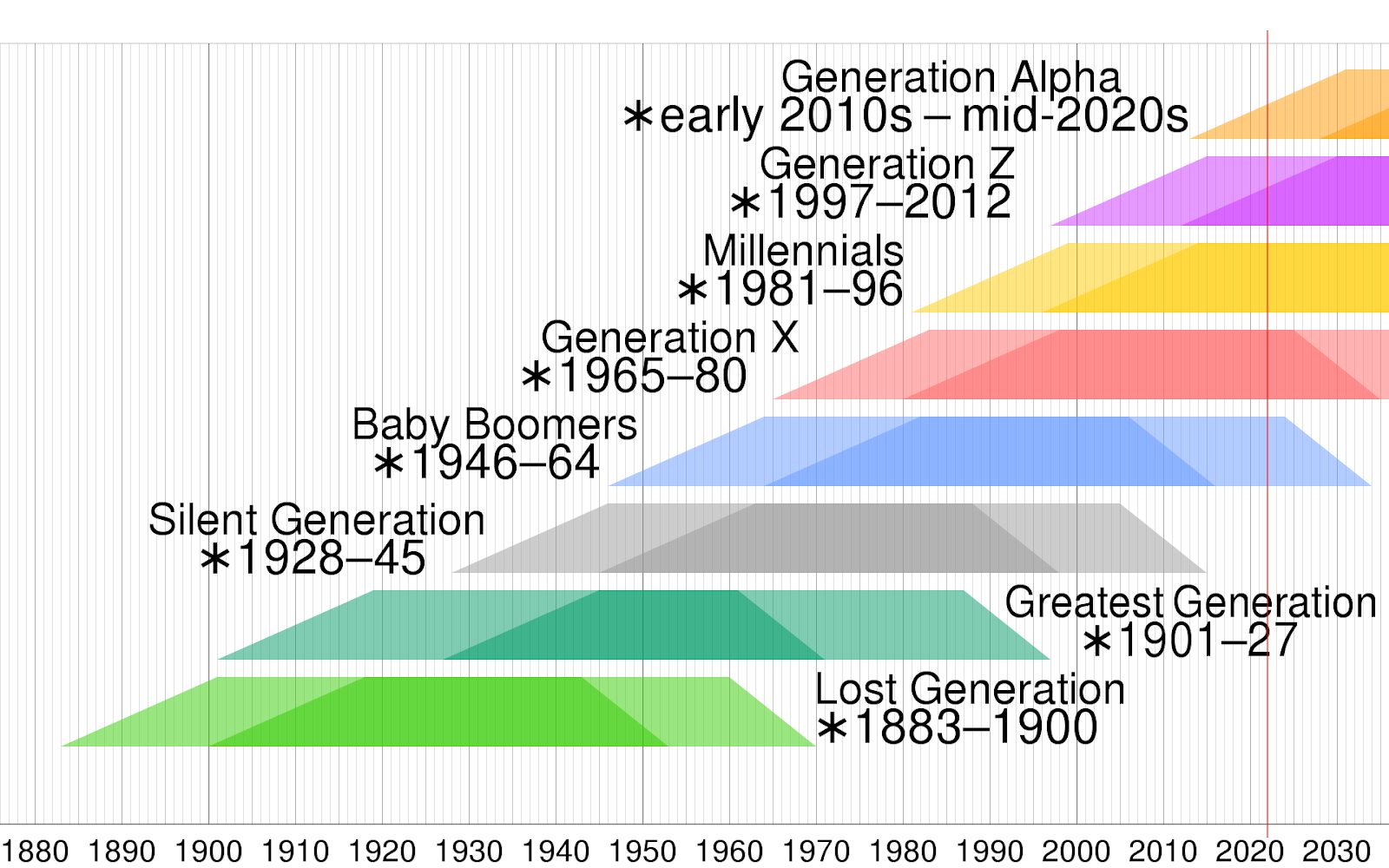
With the metaverse, this generational conflict will increase even more. Especially those born between 2010-2020, that is, Generation Alpha, and between 97-2010, that is, Generation Z, will adapt to the Metaverse much more and spend more time than Generation Y, who were born between 1981-1996. It will replace the tendencies and traditions we are used to. This will further increase the conflict between generations.
Perhaps the best example of this is that while Generation X played games comfortably on the street or in their neighborhoods, Generation Z now does it in a computer environment. Alpha will do this in the Metaverse. Parents generally think that children who spend a lot of time in front of the computer or on the phone are asocial. However, the concept of being social can now be defined very differently than the patterns defined 20 years ago.
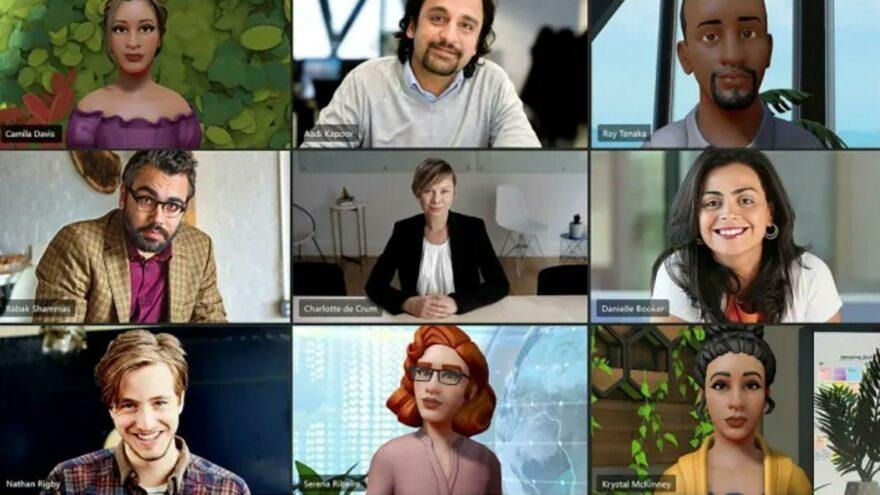
Another problem would be the Avatars used. In the Metaverse, you can choose a monster, a superhero, a robot, or an Avatar close to your physical appearance. The characters chosen can also be of different genders. It is inevitable that this will lead to debates, especially among conservative people, about the encouragement of homosexuality or of phenomena such as satanism.
The effect of the virtual world replacing physical connection on family ties is a completely different research topic. Not to mention the religious debates that may arise. One of the debates that will become a very popular, especially in Türkiye, will be "whether Friday prayers can be performed in virtual mosques in the Metaverse". These discussions are what theologians and sociologists should do, but technology will somehow find its way in transition processes.
Another ethical problem is the negative behaviors that can be applied in the Metaverse. There will be difficulties in practices such as censoring subjects such as violence and sexuality or restricting them for certain age groups. Likewise, since the censorship policy implemented by authoritarian and oppressive governments will be more difficult in a decentralized internet environment such as the Metaverse, where everyone can access everyone, it is inevitable that such governments will show resistance.
Positive Developments That Metaverse Will Add to Our Lives
Metaverse will undoubtedly add many conveniences and positive elements to our lives. Although it has many difficulties in itself, such difficulties will be overcome thanks to technological innovation.
With the metaverse, business meetings will become more effective, and we will not need to travel long distances for meetings. Instead of working from the office, you will have the opportunity to work completely virtually from your home, so you will be able to spare the time you would spend at going to work. This will have a great positive contribution to the country and individuals, both economically and in terms of time.
Time will not be wasted on visual elements such as haircuts, make-up and clothes before going to work. Instead, your virtual Avatar will look the way you've always wanted. This will return to us both in time and economically. Although the textile and cosmetics world seems to suffer from this, the textile and cosmetics world will also start to keep up with this new trend. Instead of improving your physical image, they will focus on selling makeup products, such as clothes, that will enhance your virtual image. Since people will start to buy only the clothes they need, waste will decrease and money will start to be spent on more functional clothes.
The concepts of vacation and sports will change permanently. Instead of walking on a boring treadmill at the gym, you'll be able to hike on an alien planet or on the Great Wall of China. Likewise, to visit historical sites, you will no longer have to actually go there and try to take pictures among thousands of people. Moreover, there will be no need to take permission from your workplace and travel for 12 hours by plane to take photos on the Great Wall of China. This will also reduce our carbon footprint and make a positive contribution to global warming. Of course, there is a trick that should not be missed here. Although the use of fossil fuels used in travel will decrease, there will be a significant increase in electricity consumption. If we cannot provide this electricity consumption from renewable energies such as solar and wind, we may reach a worse point than we started in terms of global warming.
We will also be able to make great strides in the field of education. You will no longer have to go Oxford to take a lecture of a professor from there and you will be able to attend any lecture of the professor you want in virtual classrooms. This will radically change the education system.
With the introduction of distance education into our lives day by day, the importance of university degrees is gradually decreasing, and the importance of talents is increasing instead. Especially in the recruitment process in fields such as software and design, portfolio and projects in which the individual works have become more important than diplomas. Universities, which should lead technological innovation, lag behind due to bureaucratic procedures. Instead of chasing a university degree, students will be able to receive the best education from their homes with online trainings that will bring competencies in the field they want to work in. This will both increase the quality of education, prevent the loss of time of individuals and greatly reduce education costs.
Doctor examinations will also evolve into the Metaverse universe over time. You can already do some doctor examinations online. With the special areas to be established to give analysis; lung x-rays and blood tests will only be conducted in places designed specifically for them, and a meeting with the doctor will be provided via Metaverse. In fact, in the future, it will be possible to perform surgeries with robotic arms over the Metaverse. In this way, instead of going to the USA to have surgery, a doctor will be connected remotely in robotic operating rooms and will be able to operate on you. As a result, violence against doctors, which is one of the reasons for doctors to migrate abroad in Türkiye, will inevitably decrease.
Another exciting development is likely to be the downturn in home prices. As a result of the significant decrease in the need for offices with the Metaverse, office buildings will be vacant. Construction companies will start to build more houses instead of building office buildings, and even most of the offices will start to turn into houses. This will start to put downward pressure on house prices. As expensive offices begin to turn into homes, we will be able to solve the problem of our living standards and the rapidly increasing house rents and house prices all over the world. Of course, the expected positive side of this picture is that house prices may still remain comparatively high due to other economic problems and dynamics on the other side, and it is necessary to analyze them rationally.
CONCLUSION
Metaverse has started to enter our lives even faster, especially after Covid-19. With businesses becoming more and more adaptable to remote working every day, the demand for the Metaverse has started to increase even more. Technological developments that will support the Metaverse are also announced one after another every day. Virtual glasses prices and usage areas are being improved day by day. NFTs have already started to be used in relation to the purchase of goods and property in the Virtual World.
The gaming world is already ready for the Metaverse and the number of players is increasing exponentially day by day. The average age of the players started to increase significantly compared to 10 years ago. This shows us that it is not only young people but also adults who play games on the computer. Many players are already playing and interacting with millions of players at the same time in large worlds called MMOs. If we give the daily active player numbers of some games, you will understand what I mean even better.
GAMEPLAY | Daily Active Players | Total Registered Players |
Minecraft | 2.62 Million | 295 Million |
Path of Exile | 1.94 Million | 24.94 Million |
Final Fantasy XIV | 1.77 Million | 37.19 Million |
Old School RuneScape | 1.29 Million | 34.03 Million |
World of Warcraft | 1.11 Million | 117.20 Million |
The numbers are increasing day by day. The numbers above are taken from only the 5 most popular MMO games. Apart from this, there are also games that are not in the MMO class but the number of users reaches millions. The gaming industry will undoubtedly lead the way for the Metaverse, but the business world, tourism and e-commerce will also follow this trend.
Metaverse is now inevitably starting to enter our lives. Although there are many speculations about when this will happen, contrary to popular belief, it will become a part of our lives in a much shorter time. With the metaverse, the internet will become decentralized unlike what we use now. Metaverse and internet 3.0 will now be in our lives.