
Central Asia’s Test of Strategic Autonomy: The Middle Corridor
ABSTRACT
This article examines how Central Asian states can develop strategic autonomy amid great-power competition involving the United States, China, Japan, the European Union, and the Gulf states, at a time when transport networks shaping the Middle Corridor in China–Central Asia–Europe trade—including the Trans-Caspian International Transport Route (TITR), Central Asia–South Caucasus–Anatolia+ (CASCA+), the Trans-Afghan Railway, and the China–Kyrgyzstan–Uzbekistan (CKU) railway—are gaining increasing prominence. It argues that Central Asian states’ ambitions to establish themselves as logistics hubs and secure a more influential position within global trade networks must be underpinned by regional cooperation. Accordingly, the article advocates the development of a common transport and customs strategy rather than the pursuit of mutually exclusive projects, and proposes the establishment of a legally constituted regional institution for transport coordination.
Central Asia’s Test of Strategic Autonomy: The Middle Corridor
1.Introduction
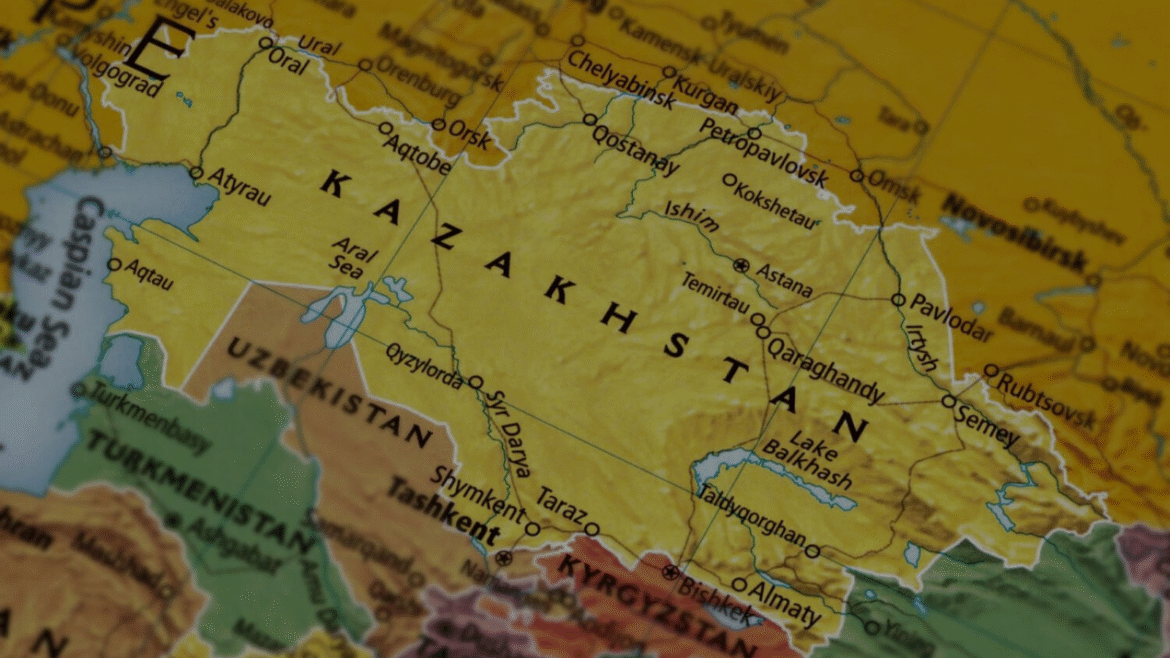
In recent years, the Middle Corridor[1], which connects China and Central Asia to Europe through the South Caucasus and Türkiye, has emerged as a central axis not only of East–West trade but also of global power competition. The United States’ Caspian Strategy, China’s Belt and Road Initiative (BRI), Japan’s investments in high-quality infrastructure,[2] and the European Union’s assistance aimed at developing the region’s logistics sector have positioned Central Asia at the crossroads of China–Europe trade routes that bypass Russia and Iran. A decisive factor shaping the future of regional transport corridors is the capacity of Central Asian states to overcome their internal rivalries and develop a common transport and customs strategy. Divergent preferences regarding alternative corridors, inconsistencies in customs and tariff regimes, and competition over transit revenues may undermine the formulation of a coordinated strategy, potentially reducing these states to passive transit territories in the struggle for influence among global powers.
It is therefore essential for Central Asian states to reconcile their individual national interests with regional cooperation, determine transport corridor routes through mutual agreement, and harmonize customs procedures and transit arrangements. Only through such coordination can transit corridors be transformed from instruments primarily serving the strategic and economic interests of global powers into mechanisms that foster regional development, economic integration, and interdependence. Indeed, the renewed emphasis on the Middle Corridor as a strategic axis connecting Asia and Europe at the Organization of Turkic States Summit, held in Ankara on 29–30 October 2026, demonstrates that the corridor is increasingly being regarded not merely as a trade route but as a political project.
2. Great Power Competition
In mid-July, U.S. Senator Steve Daines’s visits to Azerbaijan, Kazakhstan, and Turkmenistan signalled that the C5+1 initiative, previously regarded as a largely symbolic framework for cooperation between the United States and the Central Asian states, has evolved into a more substantive form of engagement.[3] Through concrete initiatives and substantial investments, Washington has been strengthening its strategic engagement with the region. One such initiative is the U.S.-backed Trump Route for International Peace and Prosperity (TRIPP) project, which is planned to extend through southern Armenia to Nakhchivan and aims to establish a secure westward transport route by connecting directly to the existing Azerbaijan–Georgia–Türkiye network.[4] Against this geoeconomic backdrop, transport infrastructure investments and competition among global actors in the Caspian Sea and Central Asia have intensified. Senator Daines’s recent visit reflects Washington’s efforts to translate its strategy of establishing a permanent Caspian transit corridor that bypasses Russia and Iran into concrete initiatives. Encompassing critical minerals, energy, telecommunications, digital infrastructure, and the TRIPP project, this emerging corridor is taking shape around three principal components: Azerbaijan, through the Port of Alat in Baku; Kazakhstan, which serves as a central pillar supported by a USD 1.1 billion tungsten partnership[5] and substantial freight volumes; and Turkmenistan, which offers significant potential for Trans-Caspian energy diversification. Nevertheless, this strategic orientation does not imply that Central Asian states are seeking to sever their ties with Moscow or Beijing. Rather, it reflects their efforts to diversify their geoeconomic options within the framework of a multidirectional foreign policy.[6]
At the core of the U.S. Caspian strategy lies the objective of establishing an uninterrupted trade and transit corridor across the Caspian Sea that does not depend on traditional Russian transit networks or routes through Iran. This strategy extends beyond physical transportation infrastructure to encompass strategic sectors such as energy, critical minerals, telecommunications, and digital infrastructure.
Within the framework of the Belt and Road Initiative (BRI), Beijing has increasingly supported the Trans-Caspian International Transport Route (TITR) to reduce its dependence on traditional transit routes through Russia, while simultaneously seeking to maintain its logistical control and dominance over infrastructure along the corridor. Meanwhile, Tokyo, through the "Central Asia + Japan" dialogue framework and investments in high-quality infrastructure, has sought both to counterbalance China’s dominant influence in the region and to support Central Asia’s independent access to European markets. Indeed, Japan has maintained a sustained interest in Central Asia since the region’s states gained independence. For instance, Japan’s development assistance to the region, channelled through the Japan International Cooperation Agency (JICA), has reached levels comparable to those provided by the United States and Germany. However, unlike Western development assistance frameworks, which frequently attach stringent political or democratic reform conditions to their support, Japan has traditionally adopted a policy of non-interference in domestic governance. While Western actors generally place greater emphasis on institutional governance and human rights monitoring, Japan has focused primarily on hard infrastructure, particularly transport and energy, as well as water management systems and agricultural modernisation.[7] More broadly, Japan appears to be pursuing a balancing strategy vis-à-vis major powers such as the United States, Russia, and China in Central Asia.
When the European Union’s Global Gateway Initiative[8]and the growing competition for investment opportunities among Gulf Cooperation Council (GCC) states are also taken into account, Central Asia emerges as an increasingly important centre of geopolitical and geoeconomic interest. The GCC states’ growing engagement with Central Asia is driven by a combination of economic, cultural, and geopolitical considerations. Seeking to reduce their dependence on hydrocarbons, the Gulf monarchies regard Central Asia’s emerging economies and agricultural potential as significant opportunities. Moreover, the Gulf states’ green energy ambitions and Central Asia’s renewable energy potential and agricultural resources offer a high degree of strategic complementarity. The shared cultural foundations provided by Islam, together with a common vision of promoting a tolerant interpretation of Islam and combating Islamophobia, further strengthen relations between the two regions. From a geopolitical perspective, both regions are seeking to enhance their strategic autonomy by diversifying their external relations amid competition among major powers, including Russia, China, the United States, and the European Union. Against the backdrop of the war in Ukraine and global energy crises, they increasingly regard one another as stable and reliable partners. This rapprochement acquired an institutional framework at the GCC–Central Asia Leaders’ Summit, held in Jeddah on 19 July 2023, where participating states agreed to expand cooperation in security, supply chains, transport, energy, and food security.[9] In terms of development assistance between 2018 and 2021, the United Arab Emirates (UAE) and Kuwait concentrated primarily on Uzbekistan, whereas Saudi Arabia and Qatar prioritised projects in Tajikistan, Kyrgyzstan, and Kazakhstan, providing financing for the energy, transport, and tourism sectors.[10] One of the most prominent examples of large-scale renewable energy investment is the USD 1.4 billion wind energy project in Kazakhstan, developed under the leadership of Masdar, a UAE-based renewable energy company, for which construction has commenced.[11]
3. From Alternative Routes to Regional Competition: TITR and CASCA+
According to the World Bank’s 2023 report, the Middle Corridor, of which the Trans-Caspian International Transport Route (TITR) forms an integral part, has the potential to halve transit times and triple trade volumes by 2030, provided that the necessary infrastructure investments and efficiency-enhancing measures are implemented.[12] One of the key factors facilitating the achievement of these objectives is the coordinated implementation of regional transport policies, particularly among landlocked Central Asian states. For instance, the Kazakhstan-led TITR and the Uzbekistan-led Central Asia–South Caucasus–Anatolia+ (CASCA+) initiative, despite their differing route priorities, share the objective of establishing connections to European markets across the Caspian Sea through Azerbaijan, Georgia, and Türkiye. Rather than viewing these initiatives as competing alternatives, it would therefore be more appropriate to consider them complementary regional connectivity projects capable of integrating existing and planned transport infrastructure. Nevertheless, the tendency of individual states to prioritise their preferred routes, coupled with their inability to coordinate infrastructure investments, customs procedures, and transit regulations within a common strategic framework, could result in inefficient resource allocation and intensify regional competition. It is therefore essential for Central Asian states to move beyond investing resources and time in developing separate transport routes and instead assess the comparative advantages of existing corridors, identify opportunities for complementarity, and formulate a common transport strategy aimed at improving the efficiency of trade flows. In this context, the adoption of the Central Asia 2040 concept, aimed at strengthening regional cooperation among the five Central Asian states—Kazakhstan, Kyrgyzstan, Tajikistan, Turkmenistan, and Uzbekistan—constituted an important step towards promoting regional coordination and economic integration in areas such as transport, energy, and the development of a shared regional identity.[13]
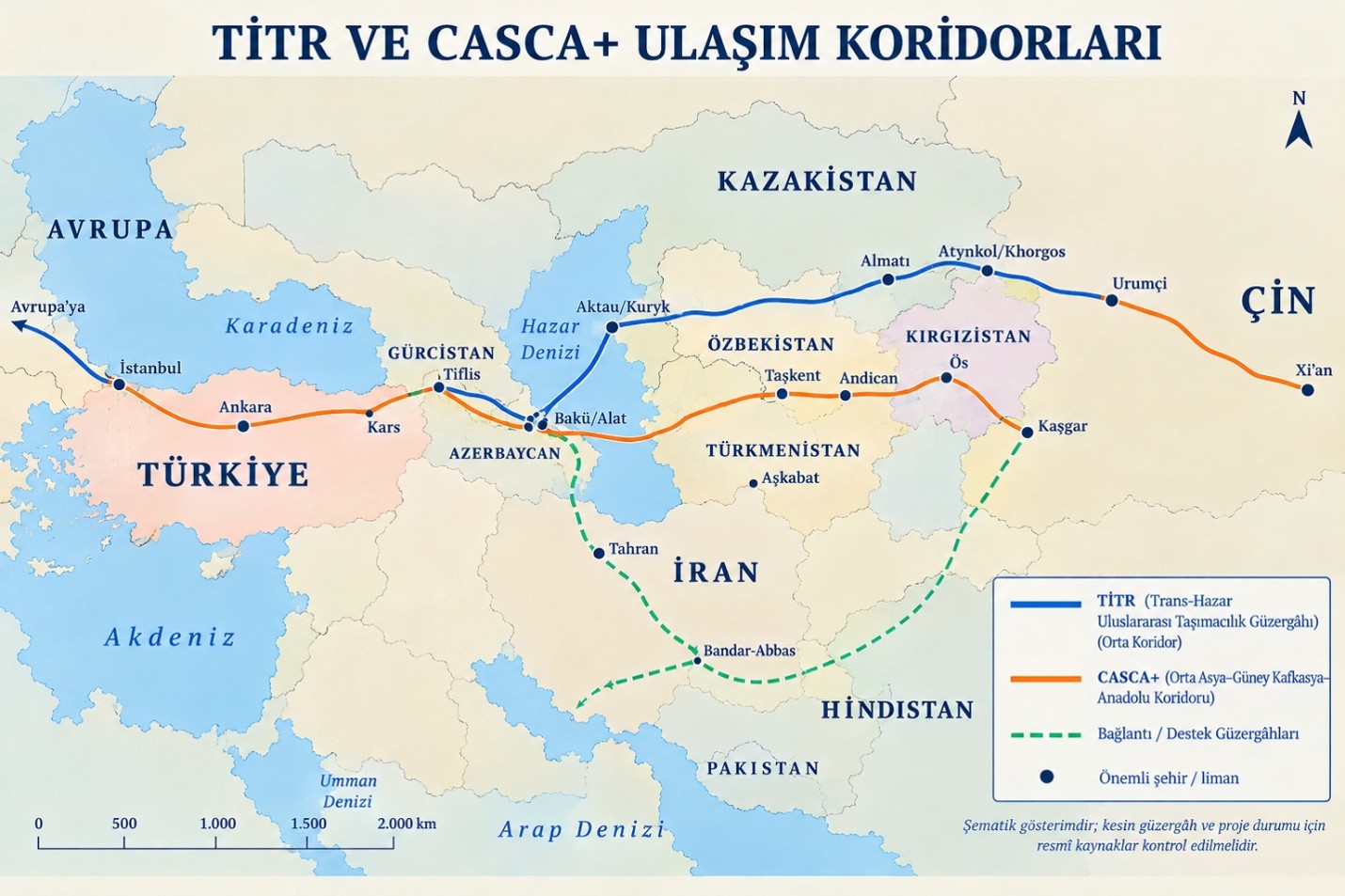
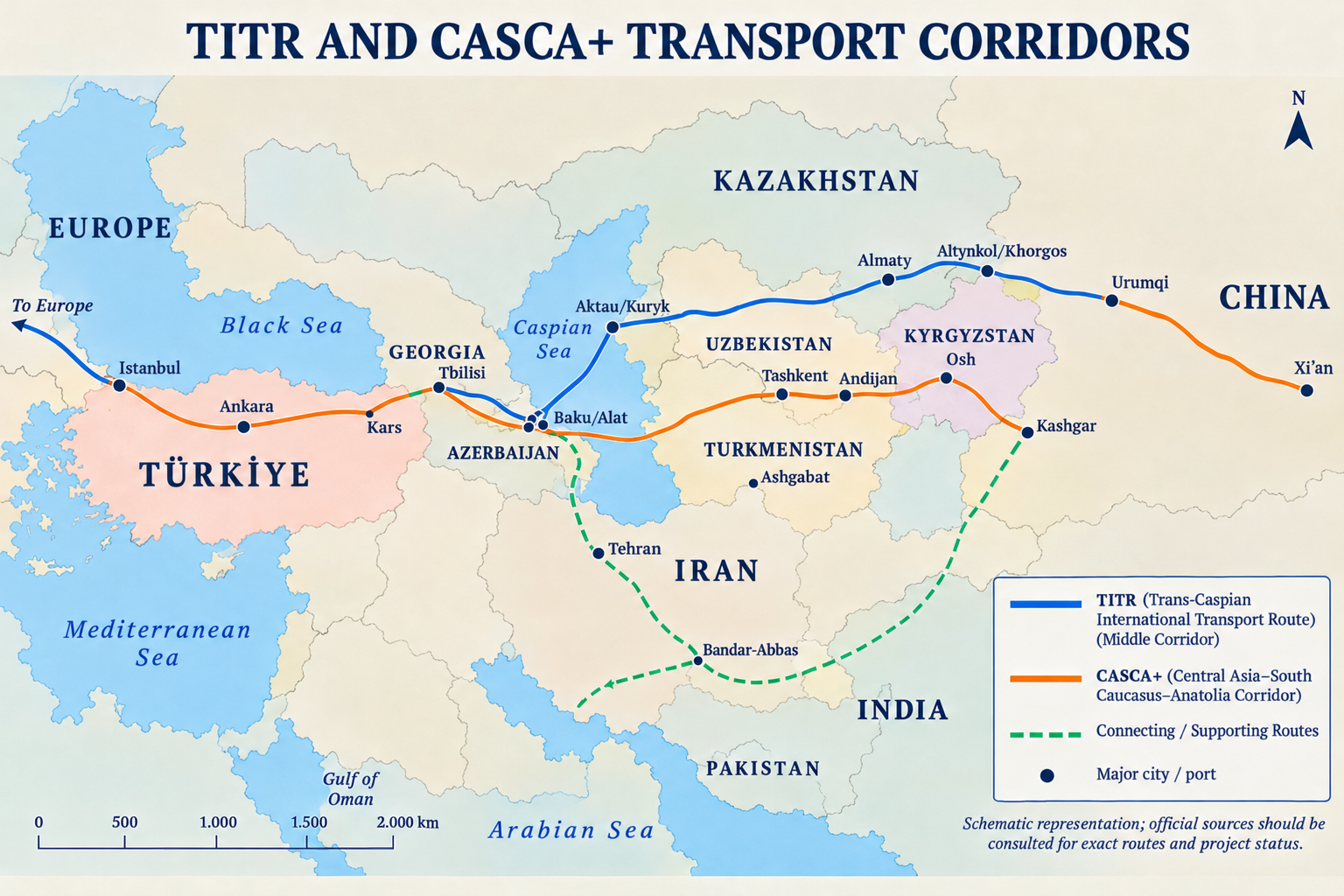
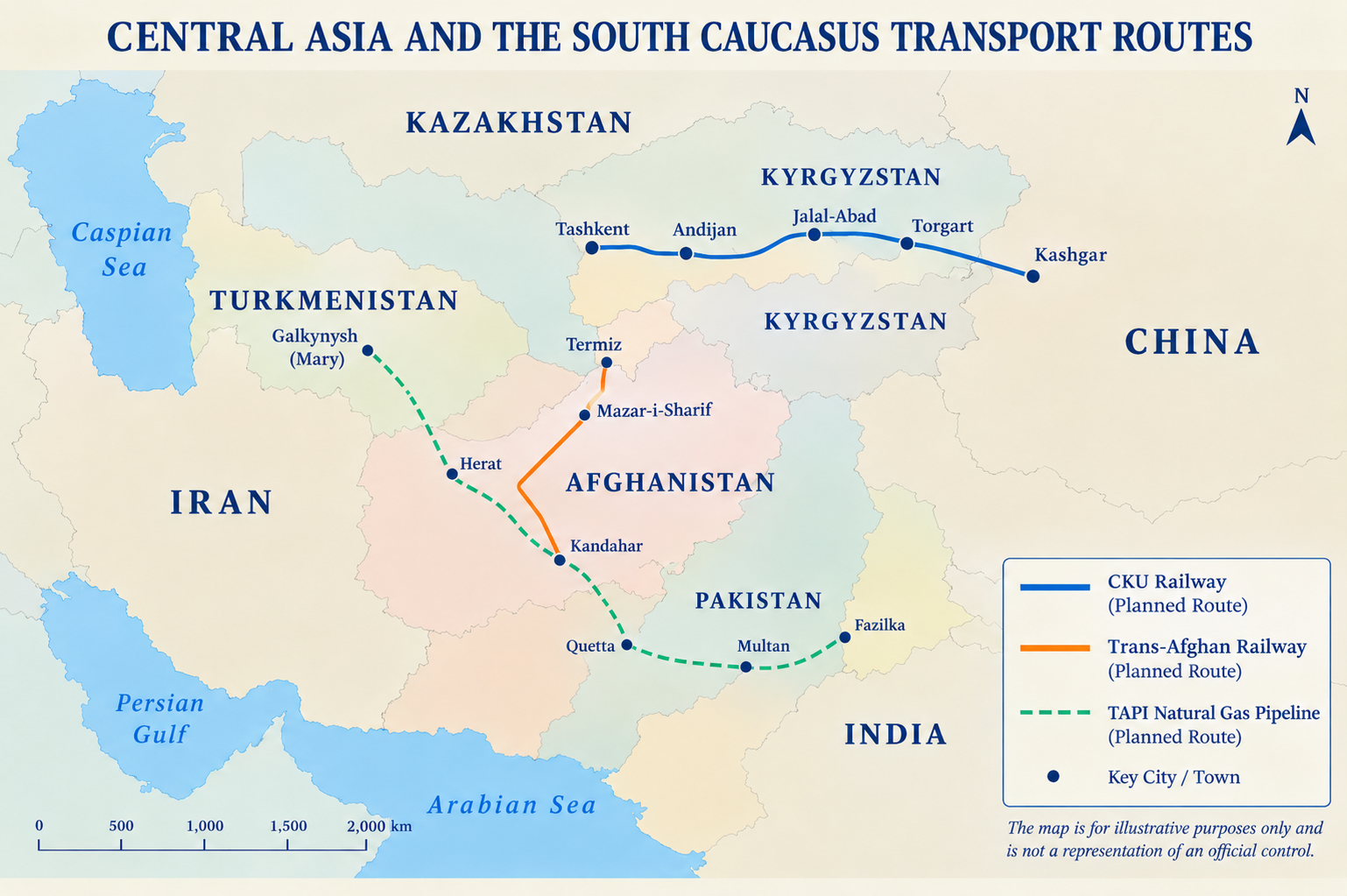
The partial overlap between the transport connections developed under the TITR and CASCA+ frameworks highlights the differing priorities of Central Asian states in integrating into global trade networks, as well as the potential competition arising from their ambitions to establish themselves as regional logistics hubs. The TITR was institutionalised in 2014 by Kazakhstan, Azerbaijan, and Georgia.[14] Kazakhstan constitutes the principal Central Asian backbone of this route, owing to its freight volumes and infrastructure investments. CASCA+, meanwhile, was launched in 2019 under Uzbekistan’s leadership, in partnership with Kyrgyzstan, Turkmenistan, Azerbaijan, Georgia, and Türkiye. Through this initiative, Uzbekistan seeks to strengthen its access to transit networks. Both corridors essentially serve the same geopolitical objective: transporting freight from China and Central Asia to Europe via the Caspian Sea, the South Caucasus, and Türkiye, while bypassing Russia and Iran. Although Azerbaijan, Georgia, and Türkiye serve as common transit gateways for both initiatives, Kazakhstan prioritises the TITR on the Central Asian side, whereas Uzbekistan places greater emphasis on CASCA+.[15] A similar divergence is evident in the railway projects extending southwards from Central Asia through Afghanistan via Kabul. Uzbekistan is accelerating the construction of the Trans-Afghan Railway, which is planned to begin in Termez and follow a route through Naibabad, Maidan Shahr, Logar, and Kharlachi. The primary objective of this railway is to secure direct access to Pakistan’s ports on the Indian Ocean. Turkmenistan and Kazakhstan, by contrast, are working to establish an alternative railway corridor through Afghanistan’s western provinces, offering a competing route to Uzbekistan’s project.[16] Furthermore, projects such as the Turkmenistan–Afghanistan–Pakistan–India (TAPI) natural gas pipeline, designed to transport natural gas to India through Afghanistan and Pakistan, have long constituted important components of southward-oriented energy and transit connectivity initiatives.[17]
As with the divergence between the TITR and CASCA+ along the western route, the pursuit of uncoordinated and parallel infrastructure projects along the southern route risks generating infrastructure duplication and inefficient resource allocation. By acting independently, Central Asian states risk exacerbating regional competition rather than facilitating border crossings and customs procedures or strengthening their collective bargaining power vis-à-vis foreign investors.
In addition to these routes, the China–Kyrgyzstan–Uzbekistan (CKU) Railway represents another significant development. Under the USD 4.7 billion project, for which a financing agreement was signed in December 2025, the approximately 523-kilometre railway connecting Kashgar to Andijan is expected to reduce transport distances by approximately 900 kilometres compared with the Kazakhstan–Russia route..[18] This corridor constitutes a complementary strategic route, providing overland access to Türkiye, Iran, and the Gulf states through Uzbekistan’s transport network without relying on ferry crossings across the Caspian Sea.
4.Where Does Türkiye Stand in This Equation?
After traversing Kazakhstan, the Caspian Sea, Azerbaijan, and Georgia, the Middle Corridor extends towards Europe either across the Black Sea or through Türkiye. Türkiye serves as the final transit bridge connecting the East–West overland trade corridor to European Union markets. Istanbul has hosted significant diplomatic and logistical meetings, reflecting Central Asia’s growing role in the East–West transit system. Türkiye, together with the railway administrations of Uzbekistan, Turkmenistan, Kyrgyzstan, Azerbaijan, and Georgia, has signed an agreement on the development of the CASCA+ corridor. The U.S.-backed Trump Route for International Peace and Prosperity (TRIPP) project, which is planned to extend through southern Armenia to Nakhchivan, similarly aims to connect directly to the existing Azerbaijan–Georgia–Türkiye transport network. Türkiye therefore maintains its position within this project as a secure transit route towards Western markets. Meanwhile, the Turkic World Vision 2040, adopted by the Organization of Turkic States (OTS), alongside initiatives such as the Turkic Investment Fund (TIF) and the TURANSEZ Special Economic Zone, seeks to increase intra-regional trade among member states and establish an institutional framework for the Middle Corridor by simplifying customs procedures.[19] Within this context, the 13th Summit of the Organization of Turkic States, held in Ankara on 29–30 October 2026, further consolidated Türkiye’s position within the Middle Corridor at both the political and institutional levels. The 163-point Ankara Declaration adopted at the summit underscores the strategic importance of the Middle Corridor, the Zangezur Corridor, the China–Kyrgyzstan–Uzbekistan Railway, and the Trans-Afghan Railway for regional connectivity and trade, while encouraging the formulation of an "OTS Transport Corridors Strategy." The declaration also supports the optimisation of customs procedures, cooperation agreements concerning the Middle Corridor, the e-CMR Memorandum of Understanding, and the "Digital Silk Road" initiative, which includes the Azerbaijan–Kazakhstan fibre-optic link.[20] Türkiye’s assumption of the organisation’s rotating chairmanship until the next summit, scheduled to take place in Uzbekistan in 2027, further presents an opportunity for the country to move beyond its role as a transit bridge and emerge as a key actor in the political coordination of the corridor.
5.Conclusion
The long-term success of transit networks in the Caspian Basin depends not only on physical investments in transport infrastructure but also on the institutional capacity and regional coordination mechanisms required to ensure the effective management of this infrastructure. In this context, translating the principles of collective action outlined in the Central Asia 2040 vision for regional cooperation into practice is of particular importance. More specifically, the establishment of a centralised transport coordination institution with a formal legal status, either with the support of platforms such as the United Nations Economic Commission for Europe (UNECE) and the Economic Cooperation Organization (ECO) or within a comparable regional institutional framework, can be regarded as a critical prerequisite for regional integration. Indeed, the October 2026 Ankara Declaration of the Organization of Turkic States, which encourages the development of an "OTS Transport Corridors Strategy," provides political recognition of the need for a common transport and customs strategy advocated in this article. However, the declaration does not envisage the establishment of a transport coordination institution with a formal legal status.
Furthermore, the ability of Central Asian states to harmonise their transport infrastructure, border-crossing procedures, and customs regulations would enable them to strengthen their strategic autonomy and establish a more independent and influential position amid international power competition. Conversely, in the absence of effective regional coordination, these states risk remaining transit territories shaped by the strategic priorities of external powers rather than emerging as influential actors capable of shaping the geopolitical dynamics of Eurasia.
Note: The maps were prepared with the assistance of artificial intelligence.
References
[1] The Middle Corridor refers to a multimodal international transport route connecting China to the South Caucasus via Central Asia and the Caspian Sea, and subsequently to Europe through Türkiye. In this study, the term encompasses the transport infrastructure extending along this route, particularly its railway and maritime connections, as well as the integrated logistics networks linking these infrastructure components.
World Bank, Middle Trade and Transport Corridor: Policies and Investments to Triple Freight Volumes and Halve Travel Time by 2030 (Washington, DC: World Bank, 2023), https://www.worldbank.org/en/region/eca/publication/middle-trade-and-transport-corridor
[2] Kamran Bokhari, “China & Japan calibrating trans-Caspian trade strategies” Jul 15, 2026, https://eurasianet.org/news-analysis-china-japan-calibrating-trans-caspian-trade-strategies
[3] C5+1 için bkz. Ulugbek Ishankhodjaev, Kenneth Holland, “The Transformation of the C5+1 Format: From Dialogue to Strategic Partnership” The International Asia Today, December 2025, https://theasiatoday.org/essays/the-transformation-of-the-c51-format-from-dialogue-to-strategic-partnership/
[4] Ani Ghulinyan, “US funding for TRIPP+ Enterprise, including Trump Route project, doubles to more than $400 million,”OC Media, August 2026. https://oc-media.org/us-funding-for-tripp-enterprise-including-trump-route-project-doubles-to-more-than-400-million/
[5] US-Kazakhstan Memorandum of Understanding on Critical Minerals Cooperation, International Energy Agency, , June 2026, https://www.iea.org/policies/29736-us-kazakhstan-memorandum-of-understanding-on-critical-minerals-cooperation
[6]Cutler, “ “Daines’s Tour Signals an Emerging U.S. Caspian Corridor Strategy.”
[7] Insebayeva S. Japan’s Central Asia Policy Revisited: National Identity, Interests, and Foreign Policy Discourses. Nationalities Papers. 2019;47(5):853-867. doi:10.1017/nps.2018.19
[8] The European Union and international financial institutions have pledged €10 billion (US$10.8 billion) in investments in the Trans-Caspian Transport Corridor under the framework of the Global Gateway and the Connectivity Agenda Platform. See: https://ec.europa.eu/commission/presscorner/detail/en/ip_24_501.
[9] Nesibe Hicret Battaloğlu and Bülent Aras, Central Asia-GCC Relations: Exemplary Cooperation within Global South, Gulf Studies Center of Qatar University and Center for International Policy Research, 2023, https://www.qu.edu.qa/siteimages/static_file/qu/research/gulf%20studies/documents/policy%20brief%2015.pdf
[10] Ibid.
[11] Bkz. Ulugbek Ishankhodjaev, Kenneth Holland, “The Transformation of the C5+1 Format”
[12] World Bank, The Middle Trade and Transport Corridor: Policies and Investments to Triple Freight Volumes and Halve Travel Time by 2030 (Washington, DC: World Bank, 2023) https://thedocs.worldbank.org/en/doc/6248f697aed4be0f770d319dcaa4ca52-0080062023/original/Middle-Trade-and-Transport-Corridor-World-Bank-FINAL.pdf
[13] Bkz. Azimzhan Khitakhunov, Can the Concept “Central Asia – 2040” Strengthen the Region’s Integration? Eurasian Research Institute, October 2024, https://eurasian-research.org/publications/can-the-concept-central-asia-2040-strengthen-the-regions-integration
[14] The institutionalisation of the Trans-Caspian International Transport Route (TITR) began on 7 November 2013 with the signing of the “Agreement on the Establishment of a Coordination Committee for the Development of the Trans-Caspian International Transport Route” among the railway companies of Kazakhstan, Azerbaijan, and Georgia. The agreement was signed during the Second International Transport and Logistics Business Forum held in Astana. For further details, see The Eurasian Transport Network, Asian Development Bank, 2024. https://eabr.org/upload/iblock/e13/1_EDB_ETN_Report_Eng.pdf
[15] For more detils see Nargiza Umarova, “Regional Connectivity and Central Asia's Need for a Unified Strategy” 06 july 2026, https://www.cacianalyst.org/publications/analytical-articles/item/13976-regional-connectivity-and-central-asia%E2%80%99s-need-for-a-unified-strategy.html
[16] İbid.
[17] Robert M. Cutler, “Daines’s Tour Signals an Emerging U.S. Caspian Corridor Strategy,” 14 July 2026, The Times of Central Asia, https://timesca.com/dainess-tour-signals-an-emerging-u-s-caspian-corridor-strategy/
[18] Bkz. “$US 4.7bn approved for China - Kyrgyzstan - Uzbekistan railway,” International Railway Journal, December 2025, https://www.railjournal.com/freight/us-4-7bn-approved-for-china-kyrgyzstan-uzbekistan-railway/ ; Genevieve Donnellon-May, “Full steam ahead for the China-Kyrgyzstan-Uzbekistan railway?” Lowy Institute,June 2023, https://www.lowyinstitute.org/the-interpreter/full-steam-ahead-china-kyrgyzstan-uzbekistan-railway; Mariana Kozlova, “Agreement signed to finance construction of the China–Kyrgyzstan–Uzbekistan railway,” Yep.uz, December 2025, https://yep.uz/en/2025/12/china-kyrgyzstan-uzbekistan-railway-financing-agreement/
[19] Luca Urciulo, The Middle Corridor Initiative, Policy Paper, EIAS, March 2024, https://eias.org/wp-content/uploads/2024/03/Briefing-Paper-The-Middle-Corridor-Initiative-Where-Europe-and-Asia-Meet.docx.pdf
[20] “Ankara Declaration of the 13th Summit of the Organization of Turkic States Published,” Anadolu Agency, October 30, 2026, https://www.aa.com.tr/tr/gundem/turk-devletleri-teskilati-13-zirvesi-ankara-bildirisi-yayimlandi/4106522