

Introduction
Defense industry has an important place for countries in terms of the advancement of production methods, production of critical products and development of different technologies. In this context, defense industry products are of strategic importance for every country because each product produced has the capacity to shape the future of the country. On the other hand, the quality of the technologies used in the defense sector and the research and development studies carried out have multifaceted effects and affect the economic and technological developments in different sectors (Yeşilyurt, 2019; 2). These interactions enable the growth of different sectors and create alternative economic activity and investment areas. Hundreds of companies in the defense sector, together with their subcontractors, the companies they supply and purchase services from create a serious economic formation. All these processes create opportunities for economic development as well as different employment opportunities.
Due to its field of activity, the defense sector also has an important place for the state and relevant public institutions. Considering the geopolitical position of our country, it is observed that the investments made in the defense sector and Türkiye's defense needs are continuous (Saraçöz, 2018,10). The strategic value of the investments made by the sector and the products it produces cause public resources to be used for production and technological developments in this field. Because the projects carried out not only provide added value to our country economically, but also enable our country to make more independent decisions politically. As a matter of fact, the existence of the projects produced directly affects the national security policies of our country.
The technological infrastructure, industrial connections and strategic value of the products produced by the defense sector have made it a necessity to support domestic and national projects by the public. In the process, the historical background of our country has shown that these products should be produced with domestic resources instead of importing. Because various embargoes imposed on our country have shown the necessity of a defense industry that is not dependent on foreign countries and the importance of making and acting independently for the future of the country. For these reasons, the defense sector needs special attention. The high costs of the projects, the alternative investments required and the nature of the sector have led to the involvement of the state in the sector and the existing companies to be related to the public.
When this entire structure is evaluated in its entirety, the importance of the defense sector for the future of our country has become an undeniable reality. Of course, every company operating in the defense industry has an important place for the future of our country and the sector, but considering the integrity of the article, the importance of investments in the sector in line with the activities/projects of the Turkish Aerospace Industries (TAI) company will be mentioned in the study. In this context, the history and necessity of the defense sector will be briefly mentioned, and then the importance of sector studies in line with TAI projects will be evaluated.
History of the Defense Sector in Türkiye
The Turkish defense industry, which started with the rise of the Ottoman Empire, lagged behind the western states in terms of industry and technology, as the Ottoman Empire lagged behind the western states (Baran, 2018; 2). Although certain facilities were established in the last period of the Ottoman Empire in order to modernize the army, these facilities were not sufficient for the modernization of the army.
Türkiye, which has given importance to the defense sector since the first years of the Republic, has established various institutions such as the Directorate General of Military Factories, Aircraft and Motor Turk S.A., Gölcük Shipyard, and Rifle and Ammunition Factory during this period. In addition, in the first years of the Republic, the Nuri Demirağ Aircraft Factory was established and one of the first domestic defense industry initiatives was commenced (Ünal, 2021). In fact, the relevant factory pioneered the production of many different aircrafts from its establishment in 1936 until its closure in 1943. By the 1950s, Türkiye, which became a member of NATO, started to meet its defense needs with the help of allied states in general.
The Cyprus Peace Operation has been an important milestone for Türkiye. The sanctions imposed on our country during the Cyprus Peace Operation have revealed the need to create a domestic and national defense policy. In this context, the necessity of establishing a national defense policy has emerged and the foundations of today's Türkiye's leading defense companies have been laid. In order to support the policies in the process, the Defence Industry Development and Support Administration Office (SAGEB) was established in 1985. In 1989, the Office was transformed into the Undersecretariat for Defence Industries (SSM). In addition to encouraging domestic defense companies, SSM has been given duties such as guiding technological initiatives, organizing the working areas of the state to achieve this goal, coordinating the necessary project processes and exporting defense industry products. The relevant institution has enabled the defense sector to be administered from a single center, allowing it to have a more effective and dynamic structure.
During all this time, institutions/companies such as TAI (1973), ASELSAN (1975), HAVELSAN (1982), ASPİLSAN (1981) and ROKETSAN (1988) were established under the umbrella of the Turkish Armed Forces Foundation and the Presidency of Defense Industries in order to meet the needs of the Turkish Armed Forces. All these institutions have contributed to the formation of our country's domestic and national defense industry by developing and producing original products within the framework of their fields of activity. As a matter of fact, the value of the products produced by the aforementioned institutions is quite great in order for our country to make independent decisions at the international level. Because, in order for a country to be independent, it must develop its own unique products in the defense industry and not be dependent on foreign countries in this field.
Especially today, developments such as the Russo-Ukrainian War draw attention to the value of the defense industry and the original projects produced. Although each company in the sector plays an important role in the development of very valuable projects, the importance of original projects produced through the example of TAI will be evaluated, taking into account the integrity of the article.
The Importance of TAI and National Projects
Established in 1973 under the name Turkish Aerospace Industries (TAI) in order to reduce foreign dependency of the Turkish defense industry, TAI has played an important role in meeting the needs of the Turkish Air Force. In 1984, with the use of F-16s in the Turkish Air Force, TAI was established via a Turkish-US joint investment partnership in order to produce F-16s, integrate systems and carry out flight tests for 25 years. However, before this 25-year period expired, the Turkish side bought American shares in 2005. Since then, TAI's field of activity has expanded and continues to work on the development, modernization, system integration and production of different aircraft platforms.
TAI continues to work in various fields. In this context, depending on the project, TAI operates in 6 main groups and continues to develop and produce different products within these groups;
- Structural Group: Within the scope of the structural group, TAI carries out joint studies with companies such as Airbus and Boeing.
- Aircraft Group: Hürkuş, Hürjet
- Helicopter Group: Atak, Atak II, Gökbey
- Unmanned Aerial Vehicle (UAV) Group: Anka, Aksungur, Şimşek, Anka III
- Space Group: Göktürk II, Small Geo
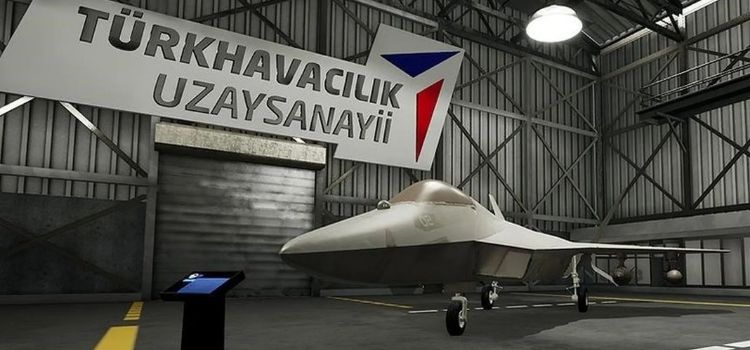
- National Combat Aircraft Group: Kaan (MMU)
Operating in the 6 main groups mentioned above, TAI is one of the limited number of companies in the world that makes so many air platforms together. In particular, the originality of the relevant projects increases its value for our country even more. The aforementioned projects are produced entirely with domestic and national resources and replace the aircraft imported from abroad in previous periods. In this way, our country has the capacity to use its geographical location more effectively and has a freer will in its own skies by reducing its dependence on foreign countries.
Türkiye's recent regional crisis with Greece, America's blocking of F-16 sales to Türkiye, Türkiye's removal from the F-35 program and the Russo-Ukrainian Crisis have once again shown us the importance of the aviation industry. At this point, especially the National Combat Aircraft (MMU) will replace the F-35, allowing us to have our own unique fighter jet and eliminating our need for F-16s. Thanks to the MMU, which is planned to make its first flight by the end of the year, our country will be one of the few states that produce its own domestic and national aircraft.
The Atak helicopter, which is currently in use, is a project that continues to be sold in addition to meeting the needs of the Turkish Armed Forces. The Atak II helicopter, which is described as the heavy class of the Atak helicopter, made its first flight in May and made Türkiye one of the rare countries that can produce heavy class helicopters. Gökbey Helicopter, which is also planned to be used in civil aviation, recently made its flight between Ankara and Istanbul with its first domestic engine.
TAI, which produces different aircraft platforms, is among the leading companies of our country in the UAV category. Especially the Russo-Ukrainian War and the Second Karabakh War showed us how important the role of UCAVs is in modern wars. UAVs, distinguished by their strategic importance, have brought a new perspective to modern warfare. Anka and Aksungur UAVs, produced and developed in TAI's inventory, are used in our country's fight against terrorism and are also sold to countries such as Tunisia and Kazakhstan thanks to their successes. Adding a new product to its UAV inventory this year, TAI has released Anka III, which is equipped with different features, and Anka III is planned to fly by the end of the year.
Conclusion and Evaluation
From the past to the present, the defense sector has been one valued not only by Türkiye but also by all countries in the world. The defense industry is not important for war, but for maintaining a peaceful environment because a strong military infrastructure allows a country to have deterrent military capabilities. This military power also increases the country's power and effectiveness internationally. As a matter of fact, almost every country in the world that we refer to as strong has important military capabilities.
Türkiye, especially with the defense investments it made towards the end of the 20th century, enabled the establishment of defense industry formations that continue today. The relevant institutions have enabled Türkiye to develop not only militarily but also economically and technologically. Domestic and national products produced and developed have become an economic gain for our country by providing alternative employment opportunities. At the same time, all these products have enabled Türkiye to become an important actor in the region and have given it an effective, respectable and deterrent stance.
All these investments not only meet the defense needs of our country, but are also sold abroad. All these revenues generate new investment areas by ensuring the growth of the defense sector in our country. The new investment areas created will also enable the development of the technologies we currently use, and will ensure the diversification of our national projects. For this reason, the defense sector, as one of the dominant sectors, will continue to provide great gains to our country and will play an important role for the future of our country.
References:
Yeşilyurt, F. & Yeşilyurt, E. (2019). Türkiye’de Savunma Sanayi. Eurasian Economic Studies, 6(2)
Baran, T. (2018). Türkiye’de Savunma Sanayi Sektörünün İncelenmesi ve Savunma Sanayi Sektörü Harcamalarının Ekonomi Üzerindeki Etkilerinin Değerlendirilmesi. Uluslararası İktisadi ve İdari Bilimler Dergisi.
Saraçöz, Y. (2018). Savunma Sanayiinin Önemi ve Savunma Harcamalarının Ülke Ekonomisine Etkileri.
Ünal, A. Y. (2021). Soyadını Atatürk’ten, ününü uçaklarından alan Türk havacılığının unutulmaz ismi: Nuri Demirağ. Anadolu Ajansı.